Quick dinners · Unpublished recipe draft
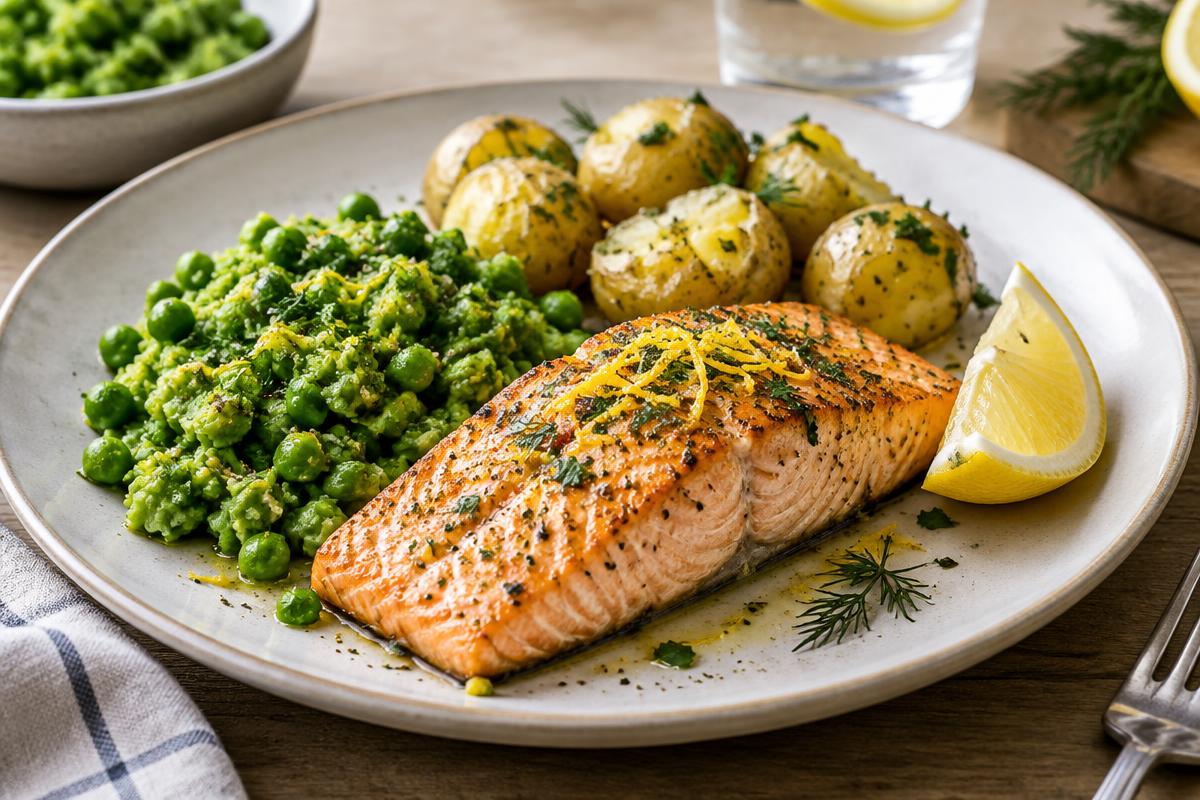
Lemony Salmon with Smashed Peas and Potatoes
This is a fish supper without a long shopping list. The peas soften into the potatoes, while lemon gives the grown-ups a little brightness without making a second meal.
Original AI-assisted recipe drafts prepared for Mother When. Not kitchen-tested or nutritionally analysed; timings and household equivalents are estimates. Use doneness cues and a food thermometer where specified.
Yield: 4 servings
- Prep
- 10 min
- Cook
- 23 min
- Wait/chill/rest
- 0 min
- Total
- 33 min
No additional resting time; water-heating time is included in cooking.
Ingredients
- 700 g (about 5 medium) potatoes, peeled if preferred and cut into 2 cm chunks
- 1.5 L (6 cups) water, for boiling
- 300 g (about 2 cups) frozen peas
- 4 skinless salmon fillets, 125 g each (500 g/about 1.1 lb total), about 2 cm thick
- 30 mL (2 tbsp) olive oil, divided
- 60 mL (¼ cup) water, for the fish
- 30 mL (2 tbsp) lemon juice
- 1.25 mL (¼ tsp) fine salt, divided
- 1.25 mL (¼ tsp) ground black pepper
Metric quantities are the reference. Household measures are approximate equivalents: 1 cup = 250 mL, 1 tbsp = 15 mL and 1 tsp = 5 mL. Weights for chopped or grated foods vary with size and packing. Oven temperatures are for a conventional oven.
Equipment
- Medium saucepan with lid
- Large frying pan with lid
- Potato masher
- Digital food thermometer
Method
- Put the potatoes and 1.5 L (6 cups) water in a saucepan. Cover and bring to a boil over high heat, allowing 6–8 minutes, then lower the heat and simmer for 10–12 minutes, until the potatoes are tender.
- While the potatoes simmer, pat the salmon dry with paper towel. Heat 15 mL (1 tbsp) oil in a large frying pan over medium heat. Add the salmon and half the salt; cook for 4 minutes. Turn carefully, add the 60 mL (¼ cup) water, cover and cook for 4–6 minutes more. Check the thickest part of every fillet reaches 70°C (158°F); cook longer if needed.
- Add the frozen peas to the potatoes for the final 3 minutes of simmering. Before draining, reserve 125 mL (½ cup) of the cooking water.
- Drain the potatoes and peas, return them to the saucepan and roughly mash with the remaining oil, remaining salt, pepper and 60 mL (¼ cup) reserved cooking water. Add up to the remaining 60 mL (¼ cup) cooking water for a softer texture.
- Spoon the lemon juice over the salmon and serve alongside the potato-pea mash. Check carefully for any fish bones before serving.
Make it work for your family
Replace salmon with four 125 g white-fish fillets such as frozen, refrigerator-thawed pollock. Cook as directed, checking early if thinner, and use the same 70°C (158°F) endpoint; thawing time is additional.
Allergen notes
Base recipe includes: fish.
Contains fish. Check frozen fish labels for added seasonings or other allergens; this recipe does not require butter or milk.
Storage and reheating
Divide leftovers into shallow containers and refrigerate promptly, within 2 hours, at 4°C (40°F) or colder. Use within 2–3 days. Reheat only the portion needed to 74°C (165°F); discard any uneaten reheated portion. Remove any remaining bones before storing.
Packing for school or work
Pack fully chilled leftovers in an insulated lunch bag with frozen ice packs, keeping them at 4°C (40°F) or colder until eating. Refrigerate on arrival if possible; discard perishables that have been above 4°C for more than 2 hours. This dish can be eaten cold if it has stayed safely chilled; otherwise reheat to 74°C (165°F). Follow school fish policies.
Freezer notes
Use the refrigerator storage guidance above. No separate freezer method is provided for this draft.
Recipe and safety notes
Busy mothers and school-age children; not infant feeding guidance.
Original untested draft; not nutritionally analysed.
Original AI-assisted wording and formulation for this collection; background safety sources did not author or test this recipe.
Read the family kitchen and source guide.
Background references
- Health Canada — Safe cooking temperatures — Internal temperature checks for poultry, ground meat, fish, egg dishes and reheated leftovers.
- Health Canada — Food safety tips for leftovers — Prompt cooling, shallow containers, a conservative 2–3 day refrigerator window, thawing and reheating.
- Health Canada — Safe school lunches — Cold and hot holding, insulated lunch bags, ice packs and school allergen policies.
- Health Canada — Safe food storage — Refrigerator and freezer temperatures and storage planning.