Packed lunches · Unpublished recipe draft
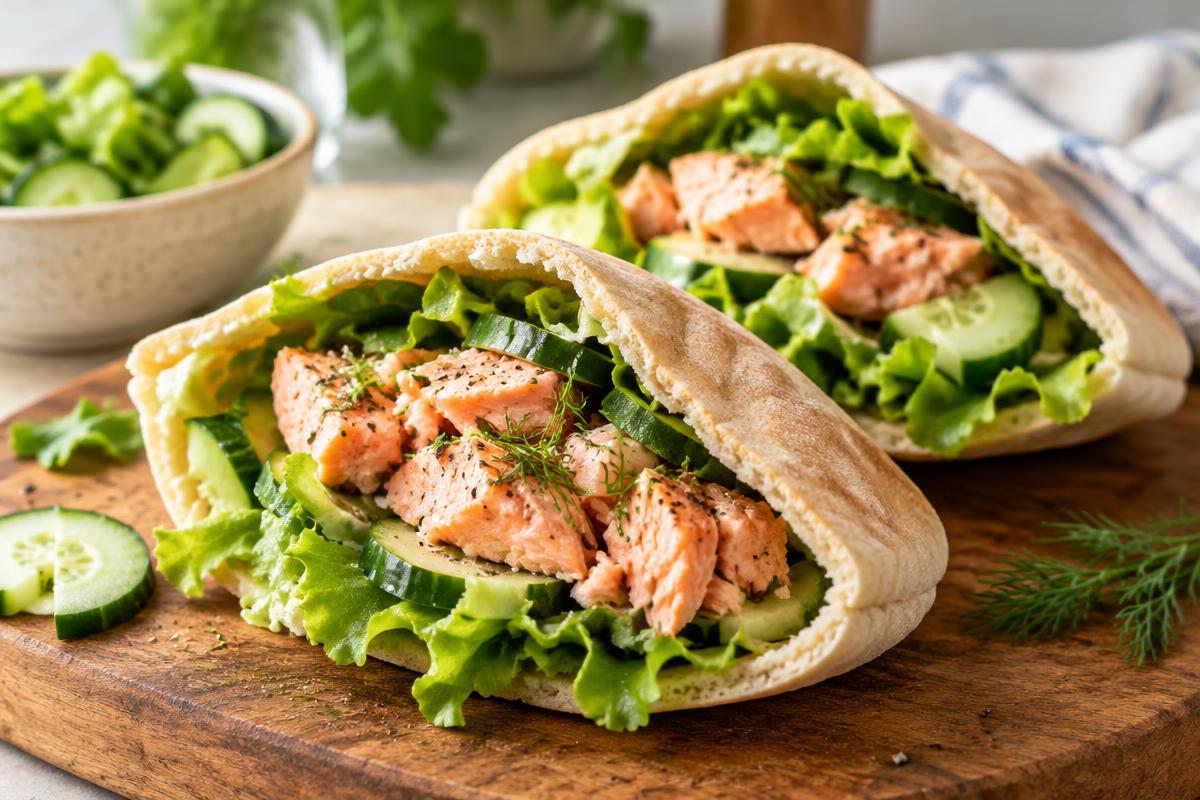
No-Stove Salmon Pita Pockets
A tin in the cupboard can rescue tomorrow’s lunch. Mix the salmon filling the night before and leave the pitas separate until morning if soggy bread is a deal-breaker in your house.
Original AI-assisted recipe drafts prepared for Mother When. Not kitchen-tested or nutritionally analysed; timings and household equivalents are estimates. Use doneness cues and a food thermometer where specified.
Yield: 2 filled medium pitas, each cut into 2 pockets
- Prep
- 15 min
- Cook
- 0 min
- Wait/chill/rest
- 30 min
- Total
- 45 min
Allow about 30 minutes for the salmon filling to chill to 4°C (40°F) or below before packing; allow longer if necessary. Already-chilled ingredients may shorten this step.
Ingredients
- 170 g drained canned salmon (about 1 cup; from one 213 g can)
- 60 g plain yogurt (¼ cup)
- 15 mL lemon juice (1 tablespoon)
- 5 g chopped fresh dill (about 2 tablespoons)
- 100 g cucumber, finely diced and patted dry (about ⅔ cup)
- 75 g carrot, finely grated (about ¾ cup)
- 2 medium whole-wheat pitas (about 120 g total; each about 15 cm/6 inches across)
- 20 g lettuce (about 2 large leaves), washed and thoroughly dried
Metric quantities are the reference. Household measures are approximate equivalents: 1 cup = 250 mL, 1 tbsp = 15 mL and 1 tsp = 5 mL. Weights for chopped or grated foods vary with size and packing. Oven temperatures are for a conventional oven.
Equipment
- Mixing bowl
- Fork
- Grater
- Shallow container
Method
- Drain the salmon. Check carefully for hard bone fragments and remove them; remove skin if preferred. Mash the salmon with a fork.
- Mix in the yogurt, lemon juice and dill, then fold in the cucumber and carrot. Transfer to a shallow container and refrigerate until the filling is 4°C (40°F) or colder, allowing about 30 minutes.
- Cut each pita in half and gently open the pockets. Divide the lettuce between all four pockets, then add the chilled salmon filling.
- Place the pita pockets in lidded lunch containers and keep refrigerated until packing. If making a day ahead, store the filling separately and fill the pitas in the morning.
Make it work for your family
Replace the dill with 5 g (about 2 tablespoons) finely chopped parsley and stir 15 mL (1 tablespoon) drained chopped capers into the filling. The capers add a tangier flavour; check their label for allergens and sulphites.
Allergen notes
Base recipe includes: fish, milk, wheat.
Salmon, yogurt and pita supply the listed allergens. Pitas may also contain sesame or soy; check the specific package. Do not serve to anyone with a fish allergy, and follow the school’s food rules.
Storage and reheating
Refrigerate the filling at 4°C (40°F) or below and use within 2 days. Assemble within 1 day for the best bread texture. Refrigerate perishables promptly and within 2 hours of preparation; do not leave the opened salmon can or finished filling on the counter.
Packing for school or work
Keep the filled pitas at 4°C (40°F) or below in an insulated lunch bag with frozen ice packs; refrigerate on arrival if possible. Discard perishable food after more than 2 hours outside safe cold holding. Serve cold.
Freezer notes
Use the refrigerator storage guidance above. No separate freezer method is provided for this draft.
Recipe and safety notes
Busy mothers and school-age children; not infant feeding guidance.
Original untested draft; not nutritionally analysed.
Original AI-assisted wording and formulation for this collection; background safety sources did not author or test this recipe.
Read the family kitchen and source guide.
Background references
- Health Canada — Safe cooking temperatures — Internal temperature checks for poultry, ground meat, fish, egg dishes and reheated leftovers.
- Health Canada — Food safety tips for leftovers — Prompt cooling, shallow containers, a conservative 2–3 day refrigerator window, thawing and reheating.
- Health Canada — Safe school lunches — Cold and hot holding, insulated lunch bags, ice packs and school allergen policies.
- Health Canada — Safe food storage — Refrigerator and freezer temperatures and storage planning.