Breakfasts · Unpublished recipe draft
School-Morning Spinach Scramble Toast
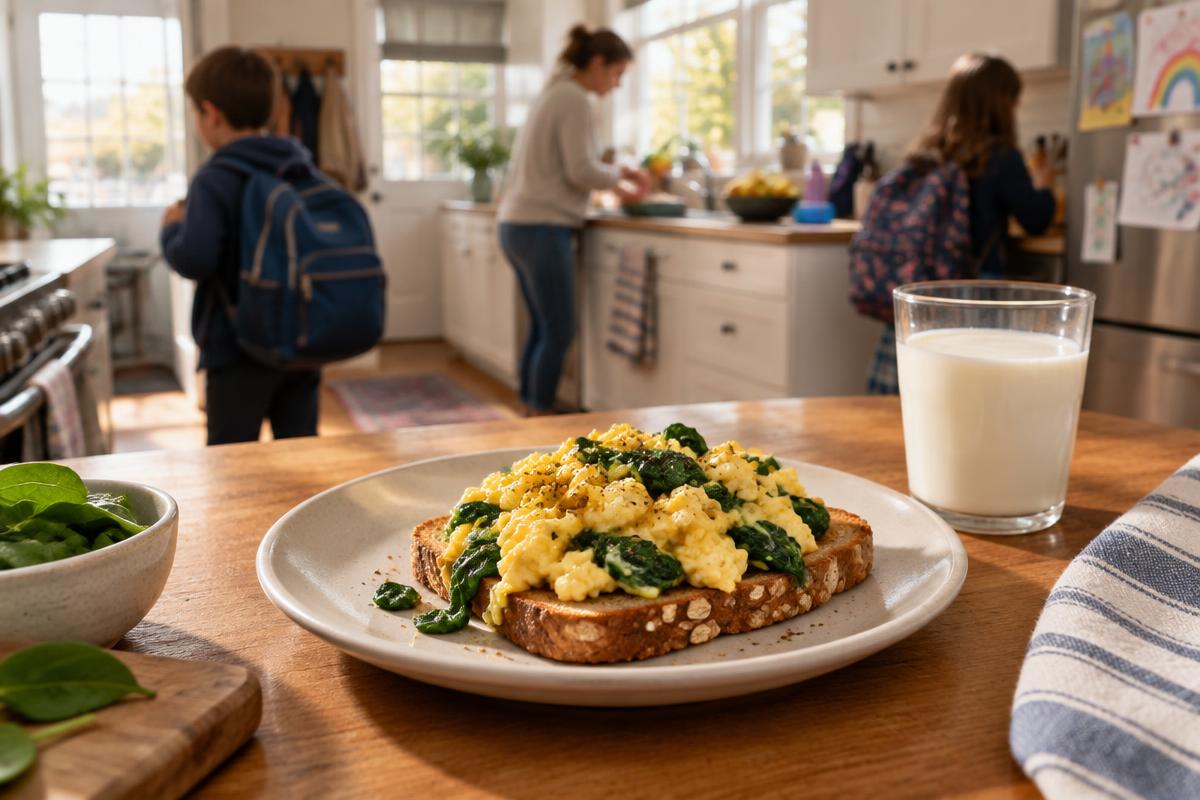
A handful of spinach and a few eggs can be breakfast without a second pan. Serve the toast beside the eggs if that works better for your family.
Original AI-assisted recipe drafts prepared for Mother When. Not kitchen-tested or nutritionally analysed; timings and household equivalents are estimates. Use doneness cues and a food thermometer where specified.
Yield: 4 portions, each with one slice of toast and a quarter of the scramble
- Prep
- 5 min
- Cook
- 10 min
- Wait/chill/rest
- 0 min
- Total
- 15 min
No resting or chilling needed; eat freshly cooked.
Ingredients
- 300 g eggs without shells (6 large eggs)
- 60 ml milk (¼ cup)
- 5 ml olive oil (1 teaspoon)
- 60 g baby spinach, roughly chopped (2 packed cups)
- 40 g grated cheddar (about ⅓ cup)
- 1.25 ml salt (¼ teaspoon)
- 160 g whole-wheat bread (4 slices, about 40 g each)
Metric quantities are the reference. Household measures are approximate equivalents: 1 cup = 250 mL, 1 tbsp = 15 mL and 1 tsp = 5 mL. Weights for chopped or grated foods vary with size and packing. Oven temperatures are for a conventional oven.
Equipment
- Medium bowl
- Large non-stick frying pan
- Spatula
- Toaster
- Digital food thermometer
Method
- Beat the eggs with the milk and salt in a bowl until the yolks and whites are combined.
- Heat the oil in a large non-stick pan over medium-low heat. Add the spinach and stir for 1–2 minutes until wilted.
- Pour in the egg mixture. Gently draw it across the pan with a spatula for 4–6 minutes, until there is no liquid egg and the thickest part reaches 74°C (165°F). Stir in the cheddar to melt.
- Toast the bread. Divide the cooked eggs among the four slices, or serve alongside them.
Make it work for your family
Replace the spinach with 100 g finely chopped cooked broccoli (about ¾ cup). Warm it in the oil for 2 minutes before adding the eggs; use broccoli that has been safely refrigerated and is within its storage time.
Allergen notes
Base recipe includes: egg, milk, wheat.
Check every packaged ingredient for allergens and cross-contact warnings; ingredients and manufacturing vary. Bread may also contain soy, sesame or other allergens; check the particular loaf. For a vegetarian meal, choose cheddar made with microbial or vegetarian rennet.
Storage and reheating
Refrigerate promptly in shallow containers, within 2 hours of cooking, at 4°C (40°F) or below. Store the scramble separately from the toast for up to 2 days. Reheat only the portion needed to 74°C (165°F), stirring so it heats evenly; discard any uneaten reheated portion.
Packing for school or work
Best eaten at home. If packing the cooked scramble, cool it promptly to 4°C (40°F) or below before packing. Pack cold at 4°C (40°F) or below in an insulated lunch bag with sufficient frozen ice packs; refrigerate on arrival if available. Discard perishable food that has been above 4°C for more than 2 hours. Follow the school’s ingredient and allergy rules.
Freezer notes
Use the refrigerator storage guidance above. No separate freezer method is provided for this draft.
Recipe and safety notes
Busy mothers and school-age children; not infant feeding guidance.
Original untested draft; not nutritionally analysed.
Original AI-assisted wording and formulation for this collection; background safety sources did not author or test this recipe.
Read the family kitchen and source guide.
Background references
- Health Canada — Safe cooking temperatures — Internal temperature checks for poultry, ground meat, fish, egg dishes and reheated leftovers.
- Health Canada — Food safety tips for leftovers — Prompt cooling, shallow containers, a conservative 2–3 day refrigerator window, thawing and reheating.
- Health Canada — Safe school lunches — Cold and hot holding, insulated lunch bags, ice packs and school allergen policies.
- Health Canada — Safe food storage — Refrigerator and freezer temperatures and storage planning.