Skin Care After 35: What Matters and What Is Marketing?
Your face hasn’t missed a deadline. Learn which basics earn their place, what peptide claims mean, and when another bottle isn’t the answer.
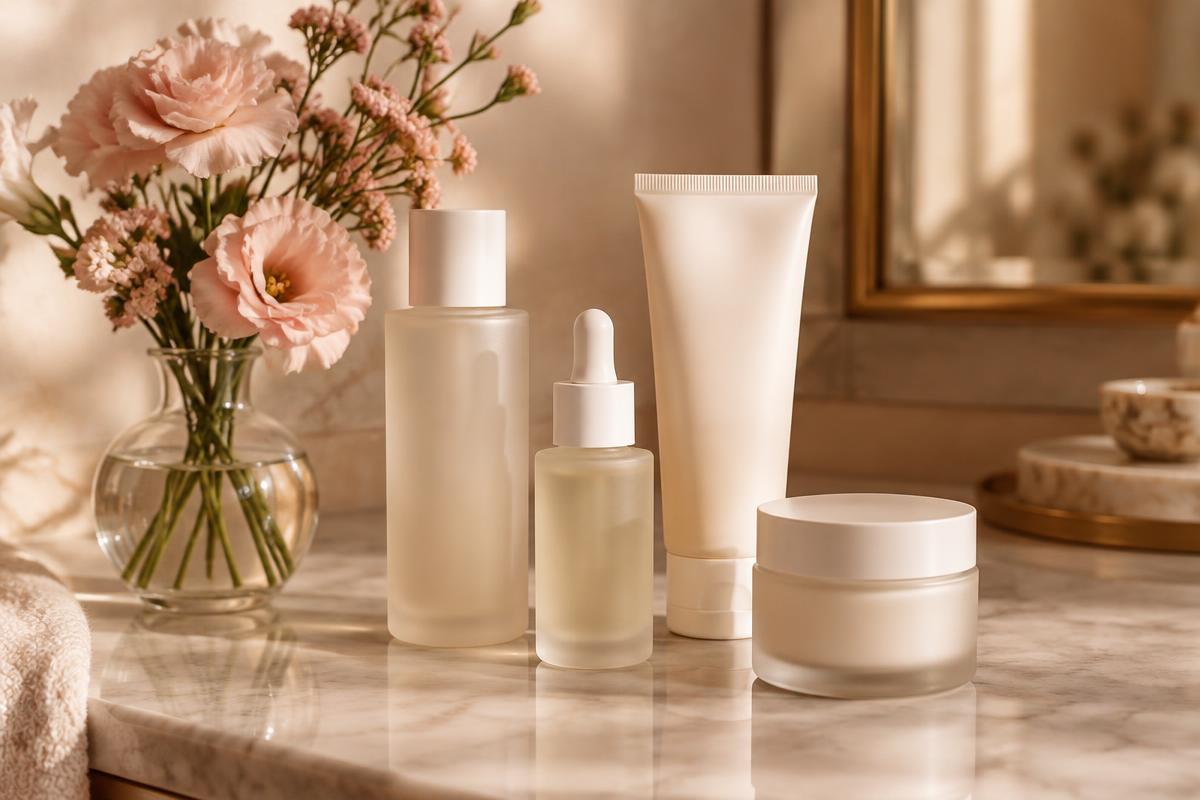
You lean toward the bathroom mirror while a small hand slides a toothpaste-smeared toothbrush onto the counter. Under the bright light, a line beside your eye looks deeper than it did yesterday. Your phone, conveniently nearby, offers a serum for exactly this alleged emergency.
The shelf already holds three half-used bottles. One stings. One smells expensive. You cannot remember what the third is supposed to do, only that a woman with excellent lighting seemed certain you needed it.
Turning 35 does not start a countdown for your face. A useful routine should make your skin more comfortable and your mornings simpler, not turn the bathroom into another workplace.
The quick read:
- Sunscreen, moisturizer, and gentle cleansing do most of the everyday work.
- Choose one concern before choosing another active ingredient.
- Research on an ingredient is not proof that every product containing it works.
The ordinary bottles deserve the good shelf space
Start with sun protection. The American Academy of Dermatology recommends broad-spectrum SPF 30 or higher, with water resistance for time outdoors. Reapply every two hours outdoors and follow directions after swimming or sweating. Shade, hats, and clothing belong alongside the bottle.
This is not just about wrinkles. Sun protection is everyday skin health, including during a sideline soccer game or a long afternoon at the park. Keep a product where you will use it, rather than saving the nicest texture for an imaginary more organized morning.
Moisturizer helps skin hold water and can soften the appearance of fine lines. That is a useful effect, even though it is not a permanent restructuring of your face. An affordable product that feels comfortable can earn its place without a prestigious ingredient list.
Add a gentle cleanser that removes sunscreen and makeup without leaving skin painfully tight. If your basic evening routine ends with moisturizer, it is still a routine. More steps are allowed if you enjoy them, not required as proof that you care.
What exactly are you asking the next bottle to do?
“Look less tired” is a very human wish, but it is a slippery shopping brief. Dryness, acne, uneven pigment, and expression lines are different concerns. A product that helps one may do very little for another.
Choose the thing bothering you most. Perhaps it is uncomfortable tightness after washing, rather than the tiny line the algorithm has recently introduced into your consciousness. Comfort is a legitimate goal; so is enjoying how your face looks. Neither needs to become a war against age.
Retinoids have established uses for acne and signs of sun-related aging. Retinol is part of that vitamin A family, but cosmetic products and prescription treatments are not interchangeable. Formulation, tolerability, and the concern being treated all matter.
The AAD’s retinoid guide says retinoids should not be used during pregnancy. If you are pregnant, trying to conceive, or breastfeeding, check ingredient suitability with your clinician. A “clean” label is not a pregnancy-safety assessment.
You also do not owe anyone a retinoid experiment. Sensitive skin, eczema, or rosacea may change the conversation. A product with strong evidence can still be the wrong choice for a particular face.
Why peptides earned a spot on the shelf
Peptides are short chains of amino acids. Some cosmetic peptides are studied for signaling related to skin structure and repair, which is why they appear in products marketed for firmness and texture.
One example is GHK-Cu, a copper-binding peptide. A 2018 review describes laboratory and other research involving collagen production and tissue repair. That gives the ingredient a scientific rationale; it does not establish that every serum containing it will produce the same visible result.
Readers are also sharing: Where Do People Get Peptides? One Question Changes the Whole Search
Related: Your Copper-Peptide Serum Has a Science Story. Let’s Get Into It: the decades-long science story behind the copper peptide in your serum.
The finished formula matters, including delivery and the moisturizing base. An appealing study about an ingredient is not automatically a trial of the bottle in your hand. Ask whether the product itself was tested, who took part, and what was measured.
A peptide product can be an enjoyable optional extra if it fits your budget and your skin tolerates it. It should not push out sunscreen or encourage you to keep using something that burns. Interesting science and a simple routine can coexist quite happily.
The six-week detail marketing tends to skip
A dramatic first impression is not the same as a durable change. Moisturizer can make fine lines look plumper quickly, while other effects may take longer. According to the AAD, most anti-aging products take at least six weeks to work, sometimes up to three months.
That is a reason to avoid changing everything at once, not a command to tolerate irritation for months. Burning, persistent redness, and peeling deserve a rethink. If a prescribed treatment causes problems, contact the prescriber rather than quietly abandoning or intensifying it.
Introduce one change at a time and follow directions. Record the start date and the single outcome you hope to notice. You do not need daily photographs or nightly inspections beneath the harshest light in the house.
Read claims with the same specificity. “Clinically tested” does not tell you whether there was a comparison group, how many people took part, or whether the outcome was a measurement or a satisfaction survey. “Felt smoother” and “reduced measured pigmentation” answer different questions.
Price does not fill in missing evidence. Neither do a white coat in an advertisement, a complicated molecule name, or a shelf full of matching products.
A five-minute bathroom edit
Before buying anything else, take stock of what is already beside the toothbrush. Keep the goal modest: a routine you understand and can repeat on an ordinary tired evening.
- Name your essentials. Identify your cleanser, moisturizer, and sunscreen. Check directions and discard expired products appropriately.
- Pause the mystery bottles. If you cannot explain what a product is for, set it aside while you review the label rather than layering it automatically.
- Choose one optional concern. Write down the change you want to see before selecting an ingredient or discussing treatment.
- Track one addition. Note when you introduce it and watch for discomfort as well as any benefit. Avoid simultaneous experiments.
- Recognize when shopping has reached its limit. Persistent acne, painful rashes, or a changing or bleeding spot deserve professional assessment.
Back at the mirror, the toothpaste smear is still there, and your face still moves when you smile. Neither is a crisis. You can wipe the counter, use the few products that earn their place, and step away without treating another ordinary morning as a deadline you have missed.
Read next
 Beauty & Self CareYour Copper-Peptide Serum Has a Science Story. Let’s Get Into ItGHK-Cu may sound like the next skincare essential. Before adding another bottle, separate the ingredient, the finished product and the evidence.
 Beauty & Self CareA Simple Skincare Routine for a Very Full DayKeep the useful basics, spend deliberately and make everyday skincare easier to reach on an ordinary busy morning.
 Beauty & Self CarePeptides in Beauty and Wellness: Why Moms Are Paying AttentionFrom copper-peptide serums to major medical breakthroughs, explore the encouraging science behind a very small molecule with a big story.
Further research
Peptide research
Around the web
- Peptides: Types, Health Benefits, and Uses — WebMD
- Trends in peptide drug discovery — Nature Reviews Drug Discovery
- Therapeutic peptides: historical perspectives, current development trends, and future directions — Bioorganic & Medicinal Chemistry
Get the weekly digest
One email a week. Unsubscribe anytime. Privacy Policy
More in Beauty & Self Care

When Did Getting Dressed Stop Feeling Fun?
The jeans pinch, the clock is ticking, and nothing feels like you. A small wardrobe reset can make getting dressed feel personal again.
Discussion
Loading comments…