Road Trip Games That Leave Room for Quiet
A small menu of low-pressure games, clear turns and kind boundaries can make the back seat easier to share.
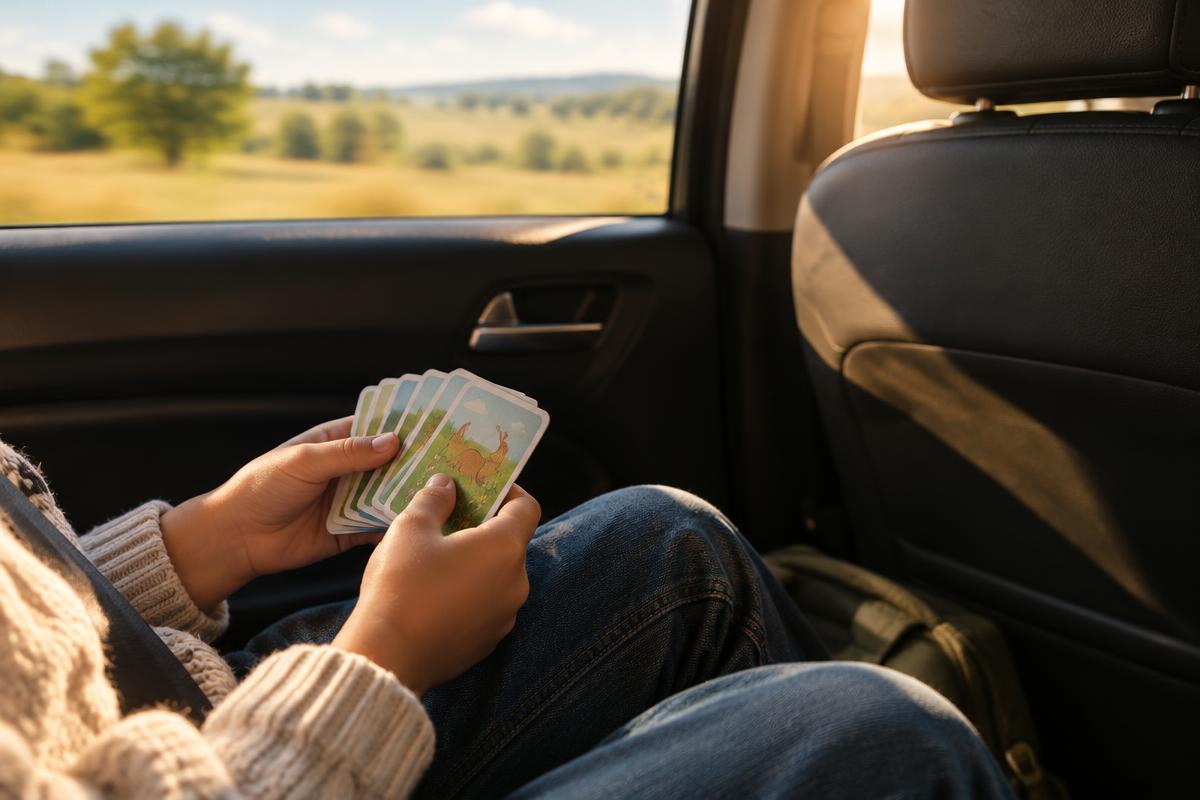
One child wants music. One wants to tell a very long story. Someone's sleeve has crossed an invisible border, and you have barely left town. Sharing a back seat asks a lot of children who cannot choose their company or go to another room.
You do not have to fill every kilometre with cheerful entertainment. A few easy options, some predictable turns and permission to be quiet can take pressure off everyone, including the mother being asked to host the entire journey.
Start with preferences rather than a packed activity bag
Before the trip, ask each child for one thing they would enjoy doing and one thing they find difficult about driving. An older child may want time without conversation. A younger one may need help understanding when their turn to choose a song will come.
Make a small menu together: a shared game, an audio story and an individual activity. There is no need to show all the options at once. Keep a second choice in reserve for when the first stops being enjoyable, not as a reward that must be earned through perfect behaviour.
Agree on a simple rotation before preferences become urgent. For example, each child chooses one song, then the grown-up chooses. Write the order down if that helps. Fairness does not require everyone to enjoy every selection, but it does help when the arrangement is visible.
Try games with a shared finish line
Competitive games can be fun until one child keeps winning. Cooperative versions let children of different ages contribute without becoming the family scoreboard.
Find five things together. Choose a category such as things that are green or things used for work. Everyone adds discoveries until the group reaches five. There is no need to race, and noticing the same thing still counts as joining in.
Build a ridiculous day. One person begins: “We arrived at a hotel run by penguins.” Each willing passenger adds one sentence. A younger child can supply a sound or choose between two ideas. Stop while it is still funny rather than insisting that everyone finish a grand story.
Guess the ordinary object. A passenger thinks of something familiar from home, and the others ask yes-or-no questions. Choose broad categories for younger children, such as kitchen things or toys. Skip strict question limits unless everybody actually likes them.
Open an imaginary shop. Choose an unlikely customer, such as a dragon or a very small giant. Each passenger suggests one thing the shop sells. There are no wrong answers and no score to keep.
The driver can listen without participating. Games should never require the driver to scan for objects, look at a screen or referee a dispute. Distraction can interfere with safe driving. Transport Canada guidance on distracted driving
Readers are also sharing: Where Do Moms Actually Get Their Peptides? The Answer Is Not What You Think
Give quiet time equal standing
A child who declines a game is not spoiling it. Try, “You can listen or do your own thing. You don't have to join.” A familiar audio story, a soft book or simply looking out the window may be plenty.
If you use screens, decide the broad plan before departure. You might save a downloaded program for one part of the journey, or let each child choose from an agreed selection. A screen does not need to carry a moral verdict about the holiday. Set up devices while parked so that the driver is not managing them on the move.
Avoid changing restraint arrangements to create more play space. Children need an appropriate car seat, booster or correctly fitting seat belt, used as directed. Activities must fit around that requirement, not the reverse. Transport Canada car seat guidance
When the argument has already started
Begin with the immediate boundary rather than a full investigation: “Hands stay with your own body. I can hear you both.” You may not be able to establish who touched whose notebook first while concentrating on the road.
Name the problem briefly: “You both want the same book.” Then offer a manageable next step: the book rests until the next stop, or the children follow a turn order already agreed. Avoid promising an exact time if traffic makes it uncertain.
If the noise or behaviour is distracting the driver, stop at a safe place when possible. Once parked, check practical needs and give everyone a little space with adult supervision. An argument may need lunch, a toilet or a pause before it needs a lesson.
Later, a short repair is enough: “What could we try differently for the next part?” You can apologise for snapping without removing the boundary.
Printable back-seat checklist
- Ask each child for one preference and one difficulty.
- Choose two cooperative games with flexible rules.
- Agree on a song or audio selection order.
- Pack an individual quiet option for each child.
- Download and set up any chosen media before driving.
- Practise one short boundary for arguments.
- Leave room for a stop and a fresh start.
Mother When leaves space for ordinary family days, including noisy ones. A few good minutes together can belong to the same journey as an argument. You are allowed to notice those good minutes without pretending the rest was easy.
Read next
 Health & Fitness7 Questions to Ask Before Peptide Hype Gets Your Credit CardA useful checklist for the late-night scroll, including the reassuring phrases that do not prove a product is safe.
 Travel & Real LifePlan a Family Road Trip With Room to StopBuild a road trip around real family needs, with flexible timing, useful stops and a simpler arrival.
 Travel & Real LifeTravelling with Toddlers and Older KidsMake room for different interests, energy levels and independence without asking one child to spend the whole holiday waiting for another.
 Travel & Real LifeSimple Travel Snacks and Family MealsKeep travel meals familiar and manageable with a short food plan, safe cooler packing and less pressure at the table.
Get the weekly digest
One email a week. Unsubscribe anytime. Privacy Policy