7 Questions to Ask Before Peptide Hype Gets Your Credit Card
A useful checklist for the late-night scroll, including the reassuring phrases that do not prove a product is safe.
The house is finally quiet. You have five minutes to yourself, and a video is promising better sleep, easier recovery and a body that feels familiar again.
Of course that gets your attention. Before it gets your money, pause for these seven signs.
1. What result is actually being promised?
“Works for everyone” leaves no room for different health histories or adverse effects. Ask what was measured, in whom, and against what comparison. A confident voice is not a clinical result.
2. Which exact product are we discussing?
“Peptide therapy” can hide important distinctions. Get the exact product name and intended use. Evidence for one medicine cannot be transferred to a different compound simply because both are peptides.
3. Does the intended use match the pitch?
A research-only label should mean laboratory research. If the surrounding sales pitch encourages personal treatment, the message is inconsistent. Do not treat fine print as permission for home experimentation.

4. What does the testing actually establish?
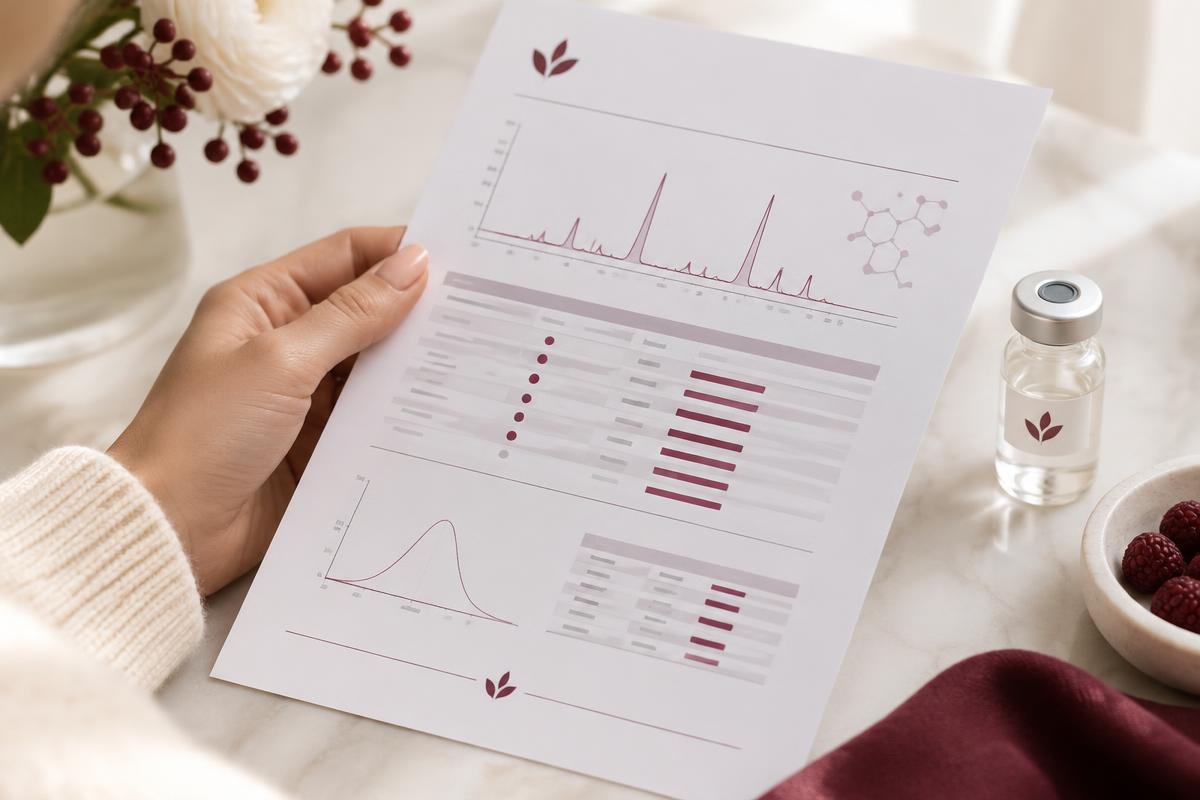
An analytical result can answer a limited laboratory question. It does not establish human benefits or overall safety, and a purity percentage alone is not the same as a verified amount per vial. USP researchers: Reference Standards to Support Quality of Synthetic Peptide Therapeutics
5. Does the study match the promise?
Was it a mouse experiment? A tiny uncontrolled human study? A test of a cream being used to sell something injectable? Read beyond the headline. The exact formulation, route, population and outcome matter.

6. Who benefits from the recommendation?
If a publisher, influencer or clinician benefits from a sale, that relationship should be clear. A discount code does not tell you whether the recommendation is independent. Ask who is being paid and for what.
7. Can I take time to decide?
An expiring offer is not a medical deadline. You should have time to review the evidence, understand costs and discuss health decisions with a qualified clinician.

What happens if nothing looks suspicious?
You still have not established that the product is appropriate for personal use. This list helps identify problematic marketing; it cannot certify a supplier or treatment.
Save the claim you want checked, then close the checkout. Tomorrow, you can take one clear question to someone qualified to answer it. You do not have to make a health decision at the end of the longest part of your day.
Research worth reading
- Proksch et al.: Collagen peptides and skin elasticity in women. An example worth reading closely: a small, short randomized trial reported better skin elasticity with particular oral collagen peptides. The formulation and outcome matter.
General education, not personal medical advice. Discuss health concerns and treatment decisions with a qualified clinician. Selected research examples illustrate encouraging findings and their limits; they are not a complete review of benefits and risks.
Read next
 WellnessOne Word, Four Very Different Products: The Peptide Mix-UpThe same word appears in skincare, prescription medicine and research catalogs. Here is a simple way to keep the categories straight.
 WellnessThat “99% Pure” Peptide Label Is Doing a Lot of WorkA polished label and a laboratory report can look reassuring. Here is what they actually tell you, and what they cannot.
 WellnessThere’s a Peptide for That? What the Science Is ShowingFrom metabolic medicines to skin research, some peptides have remarkable human data. Here’s where the most exciting evidence actually starts.
Get the weekly digest
One email a week. Unsubscribe anytime. Privacy Policy
More in Health & Fitness

The CagriSema Headline Said 25%. Here’s the Part Women Should Read Twice.
A 25% weight-loss headline sounds straightforward. Who was counted, what the researchers assumed and what they didn’t test make it a much more useful story.

The HRT and GLP-1 Finding Worth a Closer Look
A larger study is putting menopause hormones into the GLP-1 conversation. The findings are worth understanding, especially the difference between a pattern and proof.
Semaglutide or Tirzepatide After 50? What the Studies Actually Tell Women
Tirzepatide produced greater average weight loss in a direct trial, but age, medical history, strength and the outcome being studied all matter. Here is how to read the comparison without mistaking averages for personal promises.
Discussion
Loading comments…