That “99% Pure” Peptide Label Is Doing a Lot of Work
A polished label and a laboratory report can look reassuring. Here is what they actually tell you, and what they cannot.
Imagine opening a link while the pasta boils and a child asks where the charger is. There is a vial, a tidy label and a large purity percentage. Finally, something that appears to have a straightforward answer.
It is understandable to find a number reassuring. But “99% pure” answers a narrower question than “Is this appropriate for my body?”
What a laboratory report can tell you
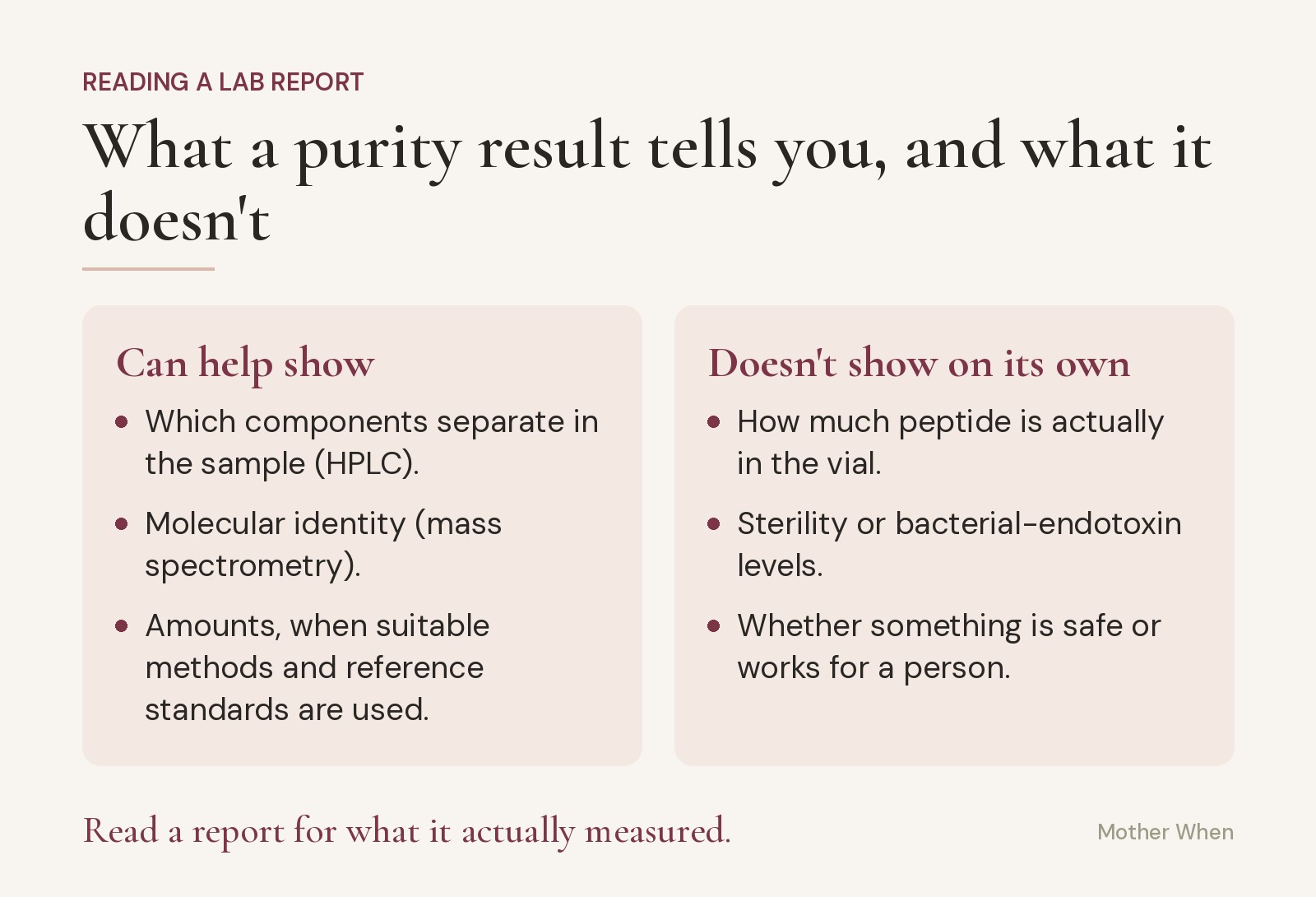
HPLC separates components in a sample. Mass spectrometry can help assess molecular identity. Used with suitable methods and reference standards, these tools can also support quantitative measurements. Their value depends on what was tested and how the result was calculated.
A chromatographic purity percentage alone does not establish the amount of peptide in a vial. Water, salts and other components can matter, too. Researchers evaluating peptide standards treat these as separate analytical questions. USP researchers: Reference Standards to Support Quality of Synthetic Peptide Therapeutics
That is why an attractive certificate should invite careful reading rather than end the conversation.

The questions the percentage does not answer
A purity or identity result does not, by itself, establish sterility or acceptable bacterial-endotoxin levels. Those are separate quality questions; a report should be read for what it actually measured.
Nor can a chemical test establish that a substance improves sleep, heals an injury or is safe for a particular person. Those are clinical questions, which need research in people using the specific product.
For someone evaluating materials for legitimate laboratory work, useful questions include:

- Does the report match the specific lot?
- What sample did the laboratory actually receive?
- Which methods and reference standards were used?
- Which properties were measured, and which were not?
Even satisfactory answers do not turn a research-only product into a medicine.
Bring the question back to your health
If you reached that page because you are exhausted, hurting or worried about a change in your body, write down the concern before you close the tab. Take that concern to a clinician, rather than trying to solve it through a purity comparison.
You do not need to become an analytical chemist between dinner and bedtime. You do deserve an answer to the question that brought you there.
Research worth reading
- USP researchers: Reference Standards to Support Quality of Synthetic Peptide Therapeutics. Laboratory methods: researchers describe how multiple analytical approaches support reliable peptide reference standards. A clinical benefit is a separate question.
General education, not personal medical advice. Discuss health concerns and treatment decisions with a qualified clinician. Selected research examples illustrate encouraging findings and their limits; they are not a complete review of benefits and risks.
Read next
 WellnessOne Word, Four Very Different Products: The Peptide Mix-UpThe same word appears in skincare, prescription medicine and research catalogs. Here is a simple way to keep the categories straight.
 Health & Fitness7 Questions to Ask Before Peptide Hype Gets Your Credit CardA useful checklist for the late-night scroll, including the reassuring phrases that do not prove a product is safe.
 WellnessThere’s a Peptide for That? What the Science Is ShowingFrom metabolic medicines to skin research, some peptides have remarkable human data. Here’s where the most exciting evidence actually starts.
Get the weekly digest
One email a week. Unsubscribe anytime. Privacy Policy
More in Wellness

A GLP-1 and Hormone Therapy? Questions to Ask Before You Combine Them
The best combination conversation begins with your symptoms and goals. These practical questions help connect menopause care, weight treatment and the medicines you already take.

The Menopause Appointment You Keep Putting Off: How to Make It Count
A little preparation can help you leave a menopause appointment with clearer answers, realistic options and a follow-up plan. Here is how to make room for the symptoms you keep brushing aside.

Menopause Hormone Therapy Is Back in the Headlines. What Actually Changed?
The latest menopause guideline is more specific than the headlines. Here’s what it says about hot flashes, sleep and mood, and what the U.S. update means for Canadian readers.
Discussion
Loading comments…