Selank and the Mind That Won’t Clock Out: What Moms Should Know
The evening can be quiet while your thoughts remain busy. Here is what small clinical and animal studies of SELANK do—and do not—say about relief from overwhelm.
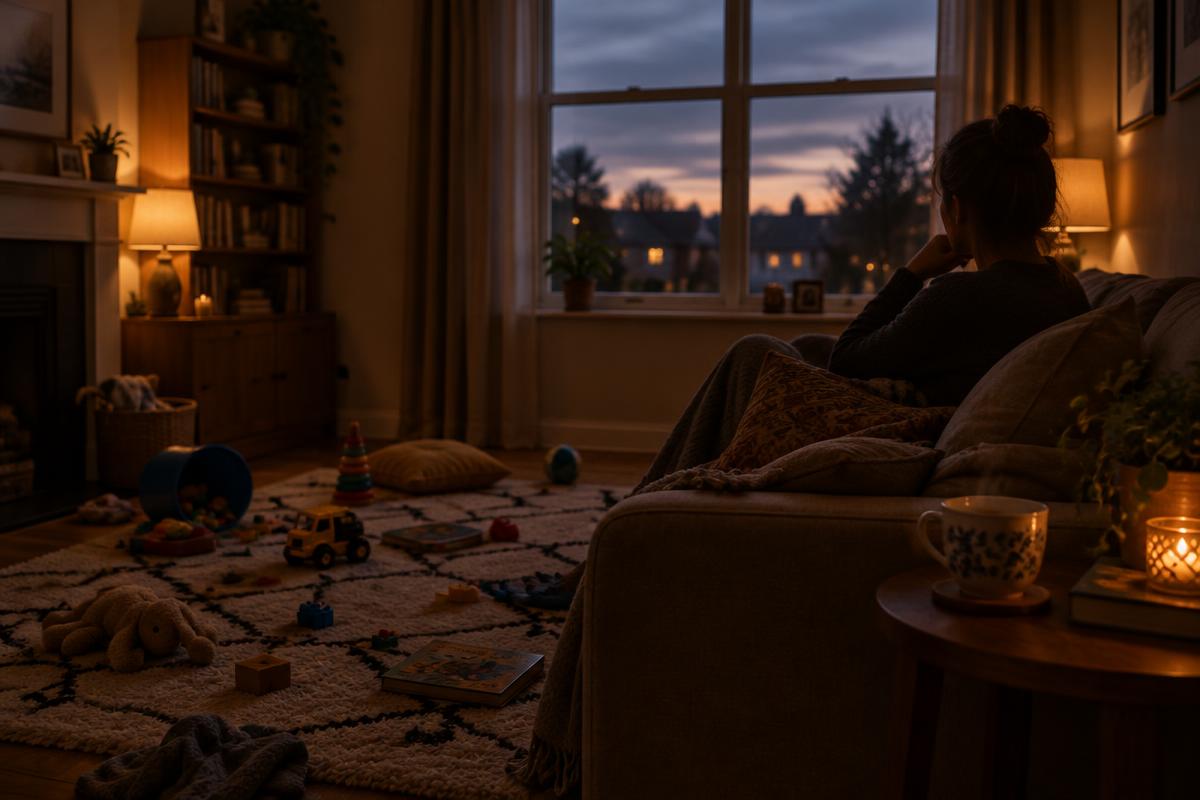
An illustrative fictional story, not a customer experience or treatment testimonial.
At 10:41, the dishwasher clicked into its drying cycle. The children were asleep. No one was asking Tessa for anything.
Her mind continued answering anyway.
There was the appointment she needed to move, the school message she had probably misread, the strange noise from the car. She rehearsed tomorrow's conversation with her manager, then revised it. Beside her, a book lay open to a page she had stopped reading twenty minutes earlier.
She wanted the ordinary experience of being finished for the evening.
That is a recognizable wish, especially when the work of anticipating everyone else's needs has no clear closing time. It also makes promises of effortless calm unusually persuasive. SELANK sometimes appears in online discussions of anxiety and stress, accompanied by confident explanations about brain chemistry.
The question worth slowing down for is whether those explanations are supported well enough to guide a personal health decision.
Where the interest comes from
SELANK is a synthetic peptide investigated for potential anxiety-related effects. In a 2008 Russian-language clinical study, researchers compared 30 patients receiving SELANK with 32 receiving medazepam. Participants had generalized anxiety disorder or neurasthenia, a diagnosis used in the study. The authors reported similar anxiety-reducing effects between the groups. Read the original clinical study.
That is human research, but it is a small comparison in particular patient groups. The accessible abstract does not provide enough detail to fully judge blinding, longer-term outcomes, or the breadth of safety assessment. A finding of similar effects in this study does not establish broad equivalence to an established treatment. It also cannot tell us whether SELANK safely helps parents experiencing everyday overload.
Readers are also sharing: Your Gym Friend Looks Stronger. Let’s Talk About Your Comeback
There is laboratory research behind some of the mechanistic discussion. A rat experiment found changes in the expression of genes involved in neurotransmission after SELANK exposure, including genes associated with GABA signaling. The authors explored a possible mechanism; they did not demonstrate a reliable “off switch” for human worry. Read the original rat gene-expression study.
Gene activity is an early piece of a much larger picture. It does not establish how a person will sleep, whether they will feel less anxious, or what unwanted effects might emerge over time. Claims that a research peptide is risk-free, non-sedating for everyone, or suitable for self-treatment reach beyond these studies.
A restless evening is not a diagnosis
Nothing in Tessa's scene establishes that she has an anxiety disorder. Persistent distress still deserves attention without requiring a reader to identify with a diagnostic label first.
The National Institute of Mental Health distinguishes ordinary stress from anxiety that persists and interferes with daily life. It recommends professional help when anxiety begins causing problems at work, at school, or in relationships. Evidence-supported care can include psychotherapy, medication, or both, chosen with a qualified clinician. NIMH guidance on anxiety and care.
If the sense of being permanently on call keeps returning, consider telling a clinician what happens after the house gets quiet. Details such as disrupted sleep, physical tension, how long the pattern has lasted, and its effect on daily life are more useful than trying to choose your own label.
There may also be responsibilities that genuinely need redistribution. A person can need mental-health support and more help with the household at the same time. Breathing exercises cannot accept a school assignment on your behalf or make an unequal workload fair.
In our fictional scene, Tessa closes the book. She writes down tomorrow's essential task and leaves the rest unfinished. There is no promised overnight relief. There is simply permission to take her experience seriously without turning an experimental compound into the answer.
Related reading
Read next
 Sleep & EnergyMOTS-c, the “Exercise Peptide”: She Had Plans for Saturday. Her Energy Did NotA mother’s interrupted Saturday opens an honest look at MOTS-c, the difference between natural exercise responses and administered peptides, and why persistent fatigue deserves clinical attention.
 Sleep & EnergySleep Is Not a Reward for Finishing EverythingThe dishwasher is humming. Your brain is still on duty. Here’s how to stop making sleep wait until the house is finished.
 Working Mom LifeThe Mental Load Is More Than a To-Do ListSomeone buys the birthday gift. You still track everything else. The missing piece is ownership, not a prettier shared list.
 Beauty & Self CareMake Room for Downtime by Deciding What Can WaitA practical way to protect a little personal time by changing the workload around it, rather than adding another task to the list.
Further research
Peptide research
Around the web
- Peptides: Types, Health Benefits, and Uses — WebMD
- Trends in peptide drug discovery — Nature Reviews Drug Discovery
- Therapeutic peptides: historical perspectives, current development trends, and future directions — Bioorganic & Medicinal Chemistry
Get the weekly digest
One email a week. Unsubscribe anytime. Privacy Policy
More in Sleep & Energy

Iron Deficiency Is Not Just Feeling Run Down
The stairs feel steeper, and your period runs the calendar. Here’s why low iron deserves more than another coffee.
Discussion
Loading comments…