Peptides at the Office? You Can Catch Up Without Losing Your Evening
The conversation can move quickly from afternoon fatigue to unfamiliar compounds. Four questions help you keep your footing.

Picture the 3 p.m. meeting. You have reread the same sentence twice, your lunch is still in the fridge, and the school has emailed about tomorrow’s costume day. Then somebody mentions peptides as though everyone already knows the details.
You can be curious without pretending you understand. You can also be tired without turning that tiredness into another professional-development assignment.
Start with the name, not the success story
“Peptides” describes a broad family of molecules. It is not the name of one treatment. The category includes established medicines as well as compounds still under investigation, so evidence about one cannot be borrowed to support another. Scientific review: Therapeutic peptides, current applications and future directions
A useful reply is simple: “Which product do you mean, and what evidence were you reading?”
That keeps the conversation specific. It also avoids guessing what a colleague takes based on her energy, appearance or performance. Nobody owes the office their medical history.

Four questions worth saving
- What is the exact product, rather than its nickname?
- Was the research conducted in people, and did it study the problem being discussed?
- What benefits and harms were measured, and for how long?
- Is the claim about an approved medicine, a cosmetic or a research-only material?
You do not have to answer these on the spot. “Send me the actual study” is a perfectly reasonable stopping point.
Your afternoon slump deserves its own conversation
If a workday symptom keeps returning, it deserves attention on its own terms. A busy schedule can make it tempting to explain away everything as “just being a mom,” but that explanation does not tell you what would help.
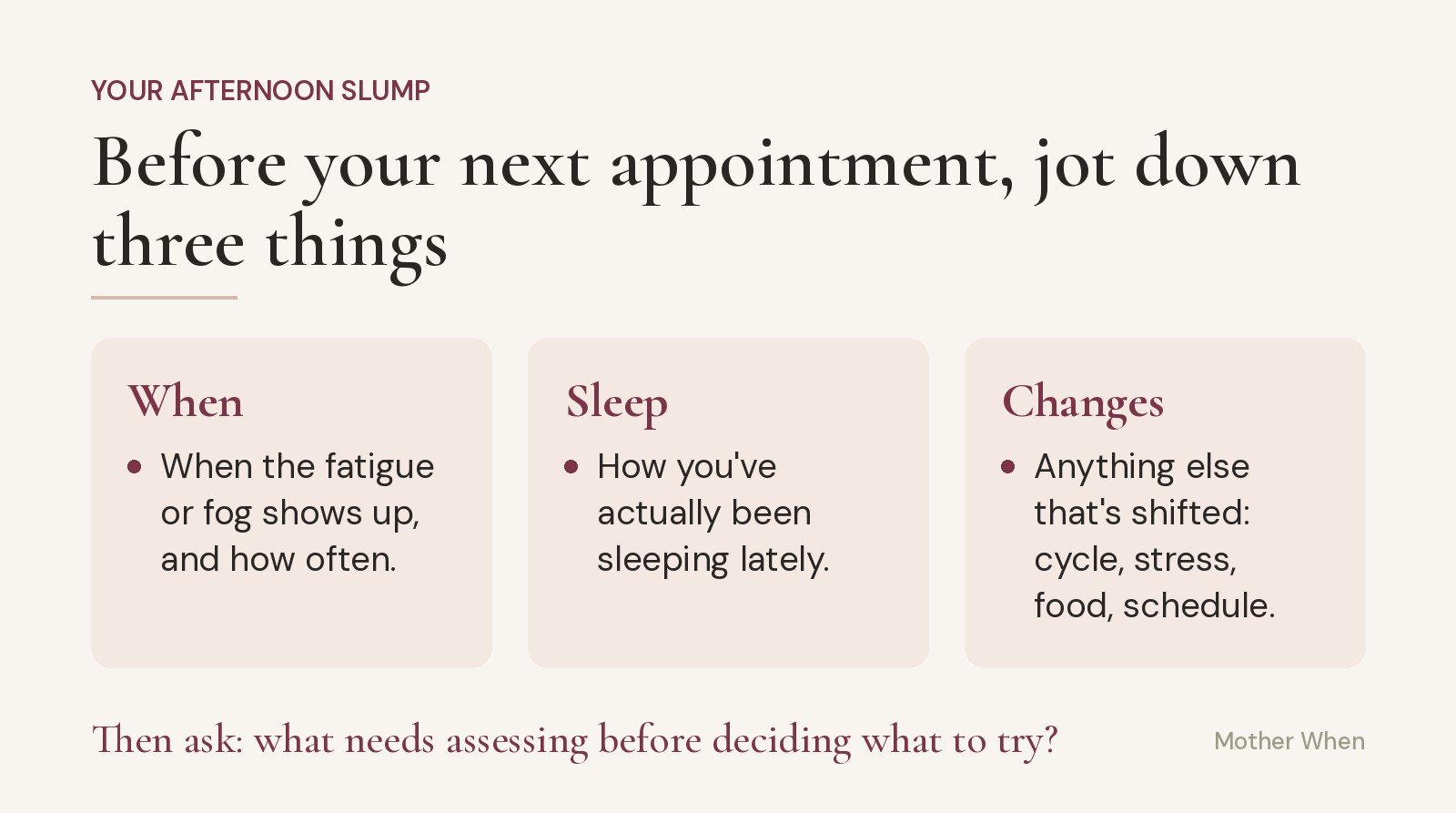
If fatigue or concentration problems persist, make a short note of when they happen, what your sleep has been like, and any other changes. Bring that to an appointment. Ask what needs assessing before deciding what to try.
For a proposed treatment, ask about evidence for your situation and its known risks. You should leave understanding what improvement would look like and when to check back.
Meanwhile, you can ask for the meeting agenda in advance, eat the lunch you packed, or request a quieter block of time. Those are reasonable workday needs, not proof that you are failing to keep up.

The most useful person in the conversation may be the one willing to say, “Let’s check what that actually means.”
Research worth reading
- Reynolds et al.: MOTS-c, exercise and physical performance. Early science: treatment improved performance in mice; the human exercise component measured naturally occurring MOTS-c in ten young men, not treatment benefits.
General education, not personal medical advice. Discuss health concerns and treatment decisions with a qualified clinician. Selected research examples illustrate encouraging findings and their limits; they are not a complete review of benefits and risks.
Read next
 WellnessOne Word, Four Very Different Products: The Peptide Mix-UpThe same word appears in skincare, prescription medicine and research catalogs. Here is a simple way to keep the categories straight.
 Working Mom LifeThe Working Mother’s Calendar Has No Empty SquaresYour meetings fit. The driving, handovers, and dinner do not. A more honest calendar starts by showing the time nobody schedules.
 Working Mom LifeThe Mental Load Is More Than a To-Do ListSomeone buys the birthday gift. You still track everything else. The missing piece is ownership, not a prettier shared list.
Get the weekly digest
One email a week. Unsubscribe anytime. Privacy Policy
More in Working Mom Life
Keep the School Alerts. Quiet the Rest of Your Phone.
Keep the school alerts, mute the sales pitches, and stop being the person who forwards everything.
You Remembered the Permission Slip. Just Not at the Door.
A practical way to remember the things that need to get out the door: put one visible cue where you can still act on it.
Discussion
Loading comments…