A Getting-Ready Routine with Fewer Decisions
Keep the parts of getting ready that you enjoy and give rushed mornings a simple version that needs no new purchases.
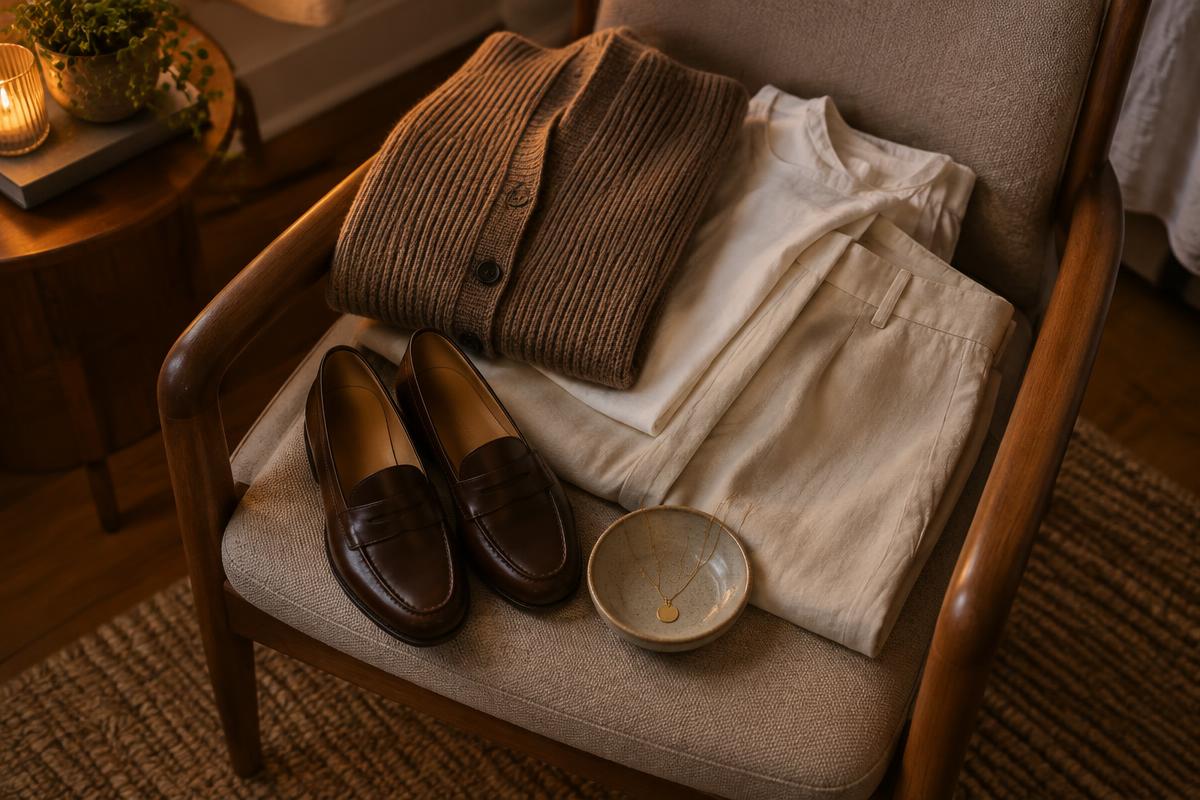
Getting ready can be a small pleasure. It can also be a series of searches: the hair tie, the clean top, the bag you used yesterday, the one product you actually wanted. By the time you are ready, the morning already feels crowded.
A shorter routine does not have to mean giving up everything you enjoy. Start by separating the things you need to leave comfortably from the things you choose because they are pleasant. Then make both easier to find.
Notice where the minutes go
On an ordinary morning, pay attention to the points where you stop. Do you change clothes because the first outfit does not work? Search for an accessory? Start a hair routine that cannot be finished in the time available? Open a drawer full of products and lose track of the one you use?
You do not need a stopwatch or a spreadsheet. Write down two repeated delays. Choose one to fix this week. Moving a useful item to the right place may help more than buying something marketed as a shortcut.
Keep the observation practical. You are looking at a routine, not grading your appearance or your ability to manage a household.
Choose an everyday version
Decide what your ordinary getting-ready routine includes. That might be getting dressed, arranging your hair in a familiar comfortable way and choosing whether you want any makeup. For someone else, makeup may be an enjoyable part of the morning worth keeping time for.
Put the steps in an order you can follow without returning to the same room three times. Keep the necessary items together where you use them, safely stored and away from children. Follow product instructions; a short routine is not a reason to improvise uses for cosmetics.
If your hair needs a longer wash or styling session, plan that separately when possible instead of assuming every morning must contain it. Hair types, personal preferences and access to help vary. The goal is a routine that suits yours, not a universal timetable.
Give rushed mornings their own version
A rushed-day plan should be decided before you are rushed. Choose an outfit combination you already know works, a familiar hair option and any optional finishing step you can comfortably skip.
This plan is particularly useful when the morning changes unexpectedly. You can move straight to the shorter version rather than attempting the full one at double speed and becoming frustrated when it does not fit.
If appearance standards at work constrain your choices, account for them honestly. Keep the required parts and look for savings in searching, preparation or optional extras. You do not need to pretend every mother can leave home in whatever feels easiest.
Keep the enjoyable version too
You may love spending time on your hair, experimenting with colour or putting an outfit together. Simplifying everyday mornings does not mean those interests are silly or excessive.
Readers are also sharing: Is Your Gym Friend on Peptides? The Quiet Trend Behind the Glow-Up
Give the longer version a place when you actually want it and have the time. Perhaps you prefer a quiet half-hour before an evening out or an unhurried weekend morning. Keep it separate from the minimum you expect yourself to do every day.
You can also change your mind. A routine that suited one season of life may not suit another. The fact that you once enjoyed a particular step does not commit you to it indefinitely.
Prepare only what earns back its effort
Evening preparation can become another exhausting list. Start with the one detail that most often causes a problem: put tomorrow's clothes together, return your bag to its place or check that the item you need is available.
Do not make every night a full reset. If you are too tired, use the rushed-day version in the morning. A useful system should have an option for the day when you do not maintain the system.
For replacements, keep a note when an everyday item is nearly finished. Buy for the routine you actually follow. A crowded drawer of possible future routines creates more decisions, not fewer.
Your two-version plan
Write two short lines somewhere you will see them:
- Ordinary morning: the clothes, hair routine and optional finishing steps I usually want.
- Rushed morning: the smallest version that meets today's needs.
Then choose one place for your everyday items and one recurring delay to remove. Try that arrangement before changing anything else.
Getting ready can feel like an act of personal choice rather than another deadline. Keep the parts that matter to you, make room for the requirements you cannot avoid and let the rest stay optional.
Read next
 Beauty & Self CareGHK-Cu, the Copper Peptide: When Did I Start Hiding From Family Photos?A familiar moment behind the camera opens a careful look at GHK-Cu, topical skincare research, and the limits of a compelling ingredient story.
 Beauty & Self CareGetting Dressed for the Body and Day You HaveBuild a few comfortable outfit choices from what fits your actual life, without making confidence another standard to meet.
 Beauty & Self CareA Simple Skincare Routine for a Very Full DayKeep the useful basics, spend deliberately and make everyday skincare easier to reach on an ordinary busy morning.
 Beauty & Self CareMake Room for Downtime by Deciding What Can WaitA practical way to protect a little personal time by changing the workload around it, rather than adding another task to the list.
Get the weekly digest
One email a week. Unsubscribe anytime. Privacy Policy