Getting Dressed for the Body and Day You Have
Build a few comfortable outfit choices from what fits your actual life, without making confidence another standard to meet.
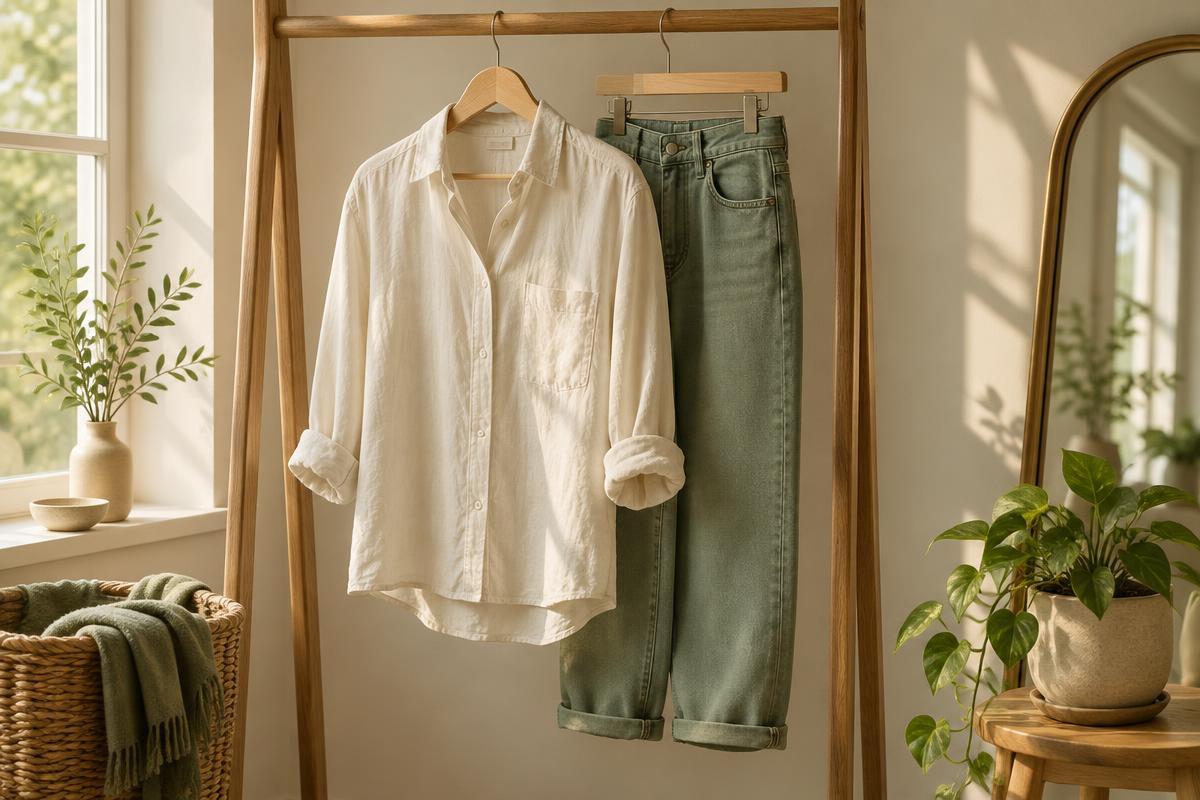
Some mornings the hardest part of getting dressed is the conversation happening in front of the wardrobe. The trousers used to fit differently. The top is technically fine but needs adjusting every time you bend down. You are already late, and now your body has become a problem to solve before breakfast.
Try beginning with a more useful question: what do I need my clothes to do today? You may need to sit comfortably, work within a dress code, carry a child, manage changing temperatures or get out the door without thinking about your waistband again.
Give today's body a fair starting point
Pull out a few things you can wear comfortably now. That does not require loving every part of your appearance or promising to feel confident. You are allowed to choose clothing on the basis that it fits and lets you get on with the day.
If certain items reliably start an unhappy argument with the mirror, move them out of your everyday line of sight when space allows. You do not have to decide immediately whether to keep, alter or donate them. A separate bag or the back of a drawer can give you a little distance from that decision.
Avoid buying an entire replacement wardrobe in a frustrated moment. First find out what is actually missing. It may be one comfortable pair of trousers rather than a new version of everything.
Test clothes in the positions you use
A standing glance in the mirror tells you only part of the story. Sit down. Reach for something. Bend or move in the ways your day requires. Check whether you can manage the fastenings easily and whether the fabric feels tolerable against your skin.
If you use mobility aids, have sensory preferences or need easy access for feeding or care, treat those requirements as central. An outfit that looks polished but makes ordinary tasks difficult has failed an important part of its job.
You do not need to explain these choices to anyone. Comfort is a practical consideration, not an apology for insufficient effort.
Make two or three reliable combinations
Start with one bottom half or dress you already reach for. Add a top, layer and shoes that work with it. Repeat with another set. Hang the combinations together if you have room, or take a private reference photo so you do not have to recreate the decision on a rushed morning.
Include the details that usually delay you. Does the outfit need a particular underlayer? Are the shoes ready to wear? Is the only suitable cardigan in the laundry? The useful part of an outfit formula is knowing the whole combination is available.
Readers are also sharing: The Beauty Aisle Secret: Why Copper Peptides Are Suddenly Everywhere
These combinations can be simple. Repeating an outfit is allowed. So is having different standards for a workday, an at-home day and an occasion you want to dress up for.
Keep personal style in the picture
Practical clothing need not erase your preferences. Perhaps you enjoy a bright colour, a familiar necklace, patterned socks or a particular shape of jacket. Choose one detail because you like it, not because it is supposed to flatter, conceal or correct you.
If style currently feels like too much work, leave this part open. You can dress for ease now and become more interested later. There is no deadline for discovering a post-baby wardrobe, a work identity or a signature look.
When someone comments on your body and you would rather discuss something else, prepare a brief response. For example: “I am choosing clothes that feel comfortable. How has your week been?” You can redirect without giving a personal explanation.
Shop for the gap you can name
Write a specific note before looking: comfortable work trousers in a washable fabric, for example, rather than “something that makes me look better.” Set a budget that includes any alterations or delivery costs you can anticipate.
Borrowing, swapping, repairing and buying second-hand may be options, but they also take time and access. Use whichever route is workable. There is no virtue in spending three evenings finding a bargain if that process leaves you more depleted than the purchase warrants.
A kinder wardrobe check
- Can I sit and move comfortably in this?
- Does it suit the tasks and requirements of my day?
- Is the complete outfit clean and available?
- Do I like any part of it, without needing a reason?
- Is a missing item a real gap or a moment of comparison?
You can get dressed without making a verdict about your body. Choose what works, add what you enjoy and let your attention move to the rest of your life.
Read next
 Beauty & Self CareYour Copper-Peptide Serum Has a Science Story. Let’s Get Into ItGHK-Cu may sound like the next skincare essential. Before adding another bottle, separate the ingredient, the finished product and the evidence.
 Beauty & Self CareWhen Did Getting Dressed Stop Feeling Fun?The jeans pinch, the clock is ticking, and nothing feels like you. A small wardrobe reset can make getting dressed feel personal again.
 Beauty & Self CareA Getting-Ready Routine with Fewer DecisionsKeep the parts of getting ready that you enjoy and give rushed mornings a simple version that needs no new purchases.
 MotherhoodMake Room for an Identity Beyond MotherhoodYou do not need a reinvention plan to stay connected to yourself. Start with an interest, a preference, or a conversation that belongs to you.
Get the weekly digest
One email a week. Unsubscribe anytime. Privacy Policy
More in Beauty & Self Care

Make Room for Downtime by Deciding What Can Wait
A practical way to protect a little personal time by changing the workload around it, rather than adding another task to the list.