When the Group Chat Recommends BPC-157: What the Evidence Actually Says
A parent asks the chat for a physiotherapist and gets a BPC-157 tip instead. Before a recommendation becomes evidence, ask whether the research studied the same problem in people.

Imagine asking the parent group whether anyone knows a good physiotherapist. Your shoulder has been complaining through school bags, grocery bags and the bag you carry because everyone else forgot a bag.
Someone replies with a different suggestion: BPC-157.
The attraction is obvious. When an ordinary movement keeps hurting, “recovery” sounds less like a wellness goal and more like being able to get on with your life.
The early findings are worth understanding
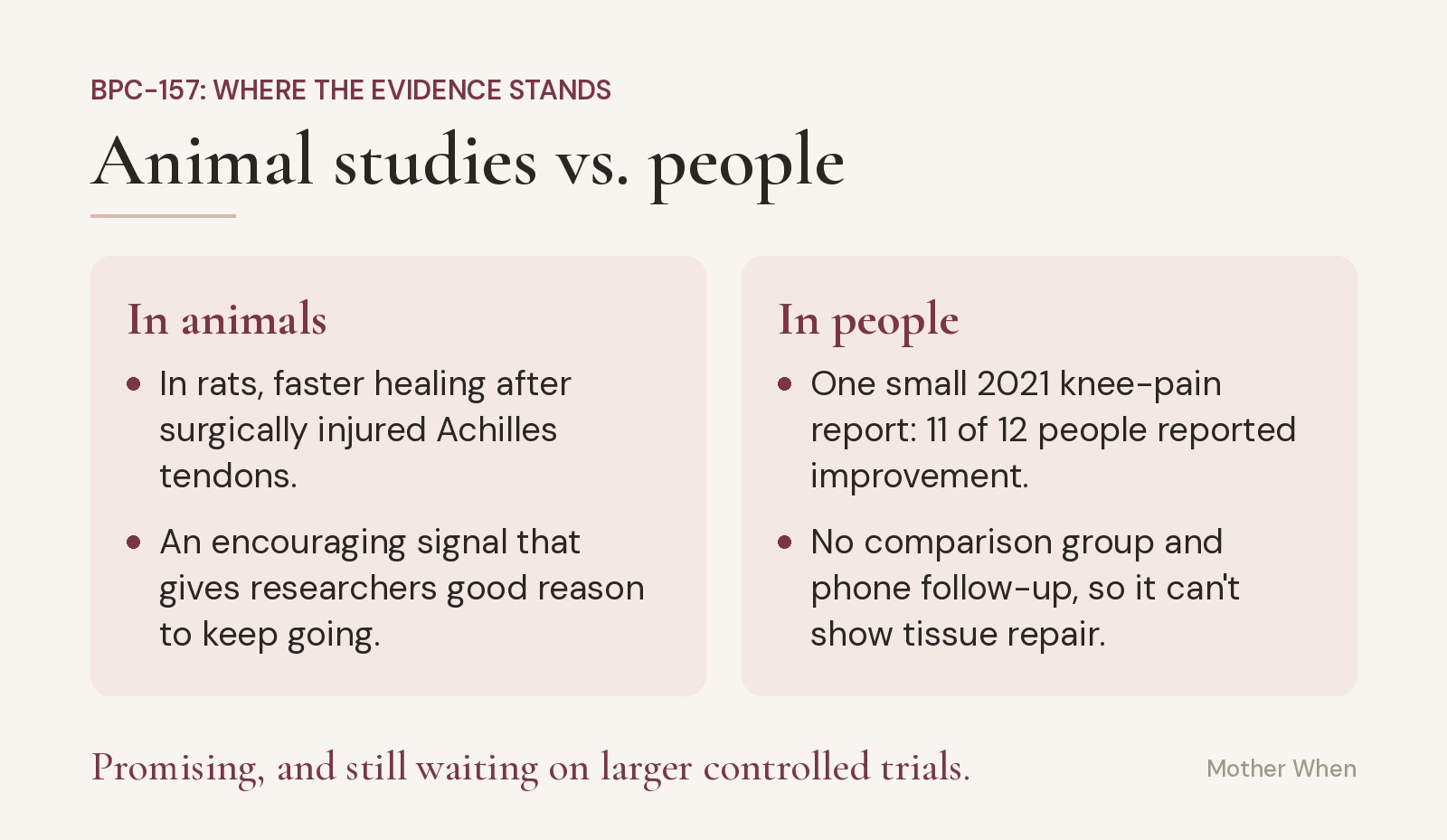
BPC-157 is an investigational peptide studied in tissue repair. In one animal study, it accelerated healing after rat Achilles tendons were surgically injured. That is a useful experimental finding, but it does not tell us how a person’s everyday shoulder pain will respond. Staresinic et al.: BPC-157 and tendon healing in rats
There is also preliminary human work. In a small retrospective knee-pain report, 11 of 12 people receiving BPC-157 alone reported improvement. The finding gives researchers a reason to investigate further. Lee and Padgett (2021): small retrospective knee-pain report
Why “promising” still needs the next study
The knee report looked back at treatment rather than randomly assigning people to treatment and a comparison group. Follow-up relied on telephone reports. It did not establish that tissue had been repaired or tell us reliably about long-term safety.
Those limits matter when a striking percentage reaches the group chat. Without a comparison group, it is harder to separate an intervention’s effect from natural recovery, other care or expectations. Small studies also easily miss uncommon harms.
The useful next question is: what would a larger, well-controlled study find? Curiosity can stay open while that answer remains unfinished.

Give the original problem some attention
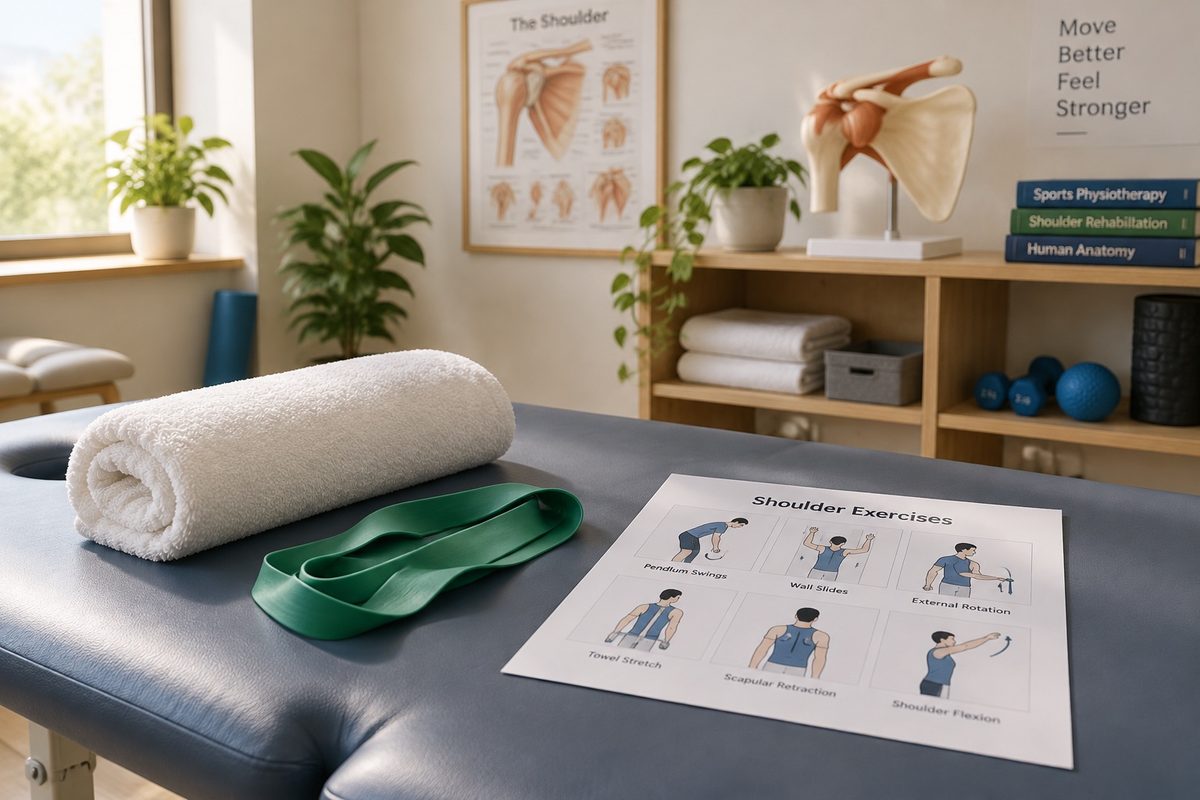
If pain persists, worsens or limits everyday movement, arrange an assessment rather than relying on a chat recommendation. Tell the clinician where it hurts, when it began, what makes it worse and what you have tried. Ask which treatment or rehabilitation options fit the likely cause and your schedule.
You can reply to the group without embarrassing anyone: “Thanks for thinking of me. I’m going to get the shoulder assessed. If you have the human study, I’m happy to read it.”
Then return to the request you made in the first place. Perhaps someone really does know a physiotherapist with an appointment after school pickup.
Wanting relief is reasonable. So is asking for evidence strong enough to guide the decision.
Research worth reading
Lee and Padgett (2021): small retrospective knee-pain report. Exploratory human report: encouraging patient-reported knee-pain changes, with no randomized control group or proof of tissue repair.
Staresinic et al.: BPC-157 and tendon healing in rats. Animal research: tendon healing improved in a rat injury model. This is not a demonstrated treatment benefit in people.
General education, not personal medical advice. Discuss health concerns and treatment decisions with a qualified clinician. Selected research examples illustrate encouraging findings and their limits; they are not a complete review of benefits and risks.
Read next
 Health & FitnessKnee Pain Interrupted Her Return to Running. What Does BPC-157 Research Actually Tell Us?Knee pain is immediate. Whether BPC-157 research answers it is a separate, narrower question—here’s what the animal studies and one small human report found.
 WellnessOne Word, Four Very Different Products: The Peptide Mix-UpThe same word appears in skincare, prescription medicine and research catalogs. Here is a simple way to keep the categories straight.
 Health & FitnessRecovery Is Not a Luxury for Busy WomenYour workout ends, but your workload doesn’t. Build recovery around real life—not an imaginary afternoon when nobody needs you.
Get the weekly digest
One email a week. Unsubscribe anytime. Privacy Policy
More in Real Stories & Community

If Not Now, When? Your Real-Life Reset
A reset should make ordinary life lighter, not give you a second job. Try one two-week experiment with room for interruptions.

When Did I Become Last on My Own List?
Your appointment keeps moving; everyone else’s stays put. Here’s how to turn one postponed need into a plan that actually has room for you.
Discussion
Loading comments…