Recovery Is Not a Luxury for Busy Women
Your workout ends, but your workload doesn’t. Build recovery around real life—not an imaginary afternoon when nobody needs you.

You finish the last squat as the dryer starts its insistent beeping. Your legs wobble pleasantly; the kitchen floor sticks slightly under your sneakers. In ten minutes, you need to collect a child, find a missing water bottle, and decide what counts as dinner.
The workout app congratulates you and schedules a rest day. Your household has apparently not downloaded that update.
For busy women, recovery has to survive contact with real life. It is not a spa day or a reward for exceptional discipline. It is part of the training plan, including on weeks when the plan needs to shrink.
The quick read:
- Rest belongs in a training schedule before exhaustion forces it in.
- Poor sleep and household demands affect what you can realistically manage.
- Food, downtime, and an adjustable plan come before recovery gadgets.
Rest is part of the work, not its opposite
Training challenges your body; recovery gives it time before the next challenge. Feeling worked is not the same as needing to feel wrecked. A demanding session can be worthwhile without making the stairs an obstacle course for three days.
MedlinePlus recommends a full day off exercise each week in its guidance on avoiding overtraining. That is a concrete reminder that rest is not an accidental gap in a serious routine. It can be a deliberate component of one.
Look at your whole week before placing the hardest sessions. A long shift on your feet, a move, or several disrupted nights may not appear in your fitness app, but they affect the resources you bring to training. An easy week on the workout calendar is not necessarily an easy week in your body.
You do not need to calculate a perfect load score. Ask whether the next session fits the day you actually have. Shortening, postponing, or skipping it can be thoughtful planning rather than evidence that your motivation has mysteriously evaporated.
Your sleep is not spare workout time
The temptation is understandable: wake earlier, finish later, make exercise happen in the margins. Sometimes that works. But repeatedly borrowing from sleep to prove consistency can make the routine harder to sustain.
The CDC recommends at least seven hours of sleep for adults ages 18 to 60. That number is not a moral grade for parents with night-waking children. It is a reason to treat sleep opportunity as valuable, not as the first available place to cut.
If last night was fractured, today’s workout does not have to pretend otherwise. Consider a shorter session, easier effort, or a rest day. A standing plan for bad nights is kinder and more useful than renegotiating your worth at 5:30 every morning.
Sleep quality matters too. Persistent sleep problems, unusual fatigue, or declining ability to do ordinary activities are worth a clinician check-in. More grit is not a diagnostic tool, and not all tiredness is an exercise problem.
An easy walk is not a secret extra workout
Recovery days can take different forms. Sometimes gentle movement feels good: a short, easy walk, relaxed mobility, or an unhurried swim. Sometimes the best choice is normal daily activity with no added session at all.
The distinguishing feature is not the activity’s name but the effort. A punishing yoga class or steep hike can be demanding even when it appears under a softer heading on the schedule. You do not need to smuggle intensity into a rest day to make it legitimate.
Readers are also sharing: The School-Pickup Peptide Conversation Just Got More Interesting
Related: Knee Pain Interrupted Her Return to Running. What Does BPC-157 Research Actually Tell Us?: the recovery research everyone's group chat keeps bringing up, and what the studies actually showed.
Also, a weekly activity target does not mean every day needs a workout. The WHO notes that all physical activity counts, including movement during work, transport, and household tasks. That does not make chores a perfect training program. It does mean the movement already filling your day is not invisible.
If you are new to exercise or returning after a long gap, a sustainable routine may look surprisingly modest. You can build from something repeatable. A comeback does not require recreating your most energetic pre-children week on day one.
The recovery aisle can wait
Before researching the latest tool, look at what happens immediately after training. Do you eat, or does school pickup turn into errands and then an emergency handful of crackers? Is there water nearby? Do you ever sit down?
Pack an ordinary snack if the next meal is far away. Yogurt and fruit, a sandwich, or leftovers may be more useful than a complicated ritual. Aim for regular meals rather than deliberately restricting food because it is a rest day. Specific sports-nutrition needs can be discussed with a registered dietitian.
A comfortable routine need not be optimized to the minute. If a device or a special drink feels pleasant and fits your budget, that is a preference. It is not evidence that your body cannot recover without it.
Pay attention to changes that persist. MedlinePlus lists declining performance, heavy limbs, irritability, and sleep trouble among possible signs of too much exercise. These symptoms have other causes as well. They are prompts to reassess, not a checklist for diagnosing yourself with overtraining.
Stop activities that cause new or worsening pain. Seek advice for recurring pain or unusual exhaustion, and urgent help for chest pain, fainting, or severe breathing difficulty. A recovery plan should not become a way to explain away concerning symptoms.
Put this week’s recovery on the actual calendar
Try a brief planning session before the week gets away from you. Include care work and employment, not just exercise. The goal is to make the plan possible, not to design a perfect week that requires a different household.
- Choose the demanding sessions first. Place them where there is realistic room around them, and leave a full exercise-free day in the week.
- Write a bad-night alternative. Decide now what replaces a hard session after disrupted sleep: easier effort, less time, or no workout.
- Solve the food gap. Set aside a meal or snack before training if the hours afterward are usually chaotic. Put water where you will remember it.
- Ask for one complete handoff. If another adult can help, specify a recovery window and the task they own, including the planning.
- Remove one demand if you cannot delegate. Choose an easier dinner, postpone an optional errand, or stop counting extra steps on the rest day.
The dryer will beep again. Someone will still need the water bottle. But you can let the workout end without immediately asking your body to prove something else. Recovery is not a separate, luxurious life waiting beyond motherhood. It is a little room inside this one—and that room belongs in the plan.
Read next
 Health & FitnessYour Gym Friend Looks Stronger. Let’s Talk About Your ComebackPeptide talk can turn an ordinary workout into a comparison exercise. Here is how to bring the focus back to your own strength and recovery.
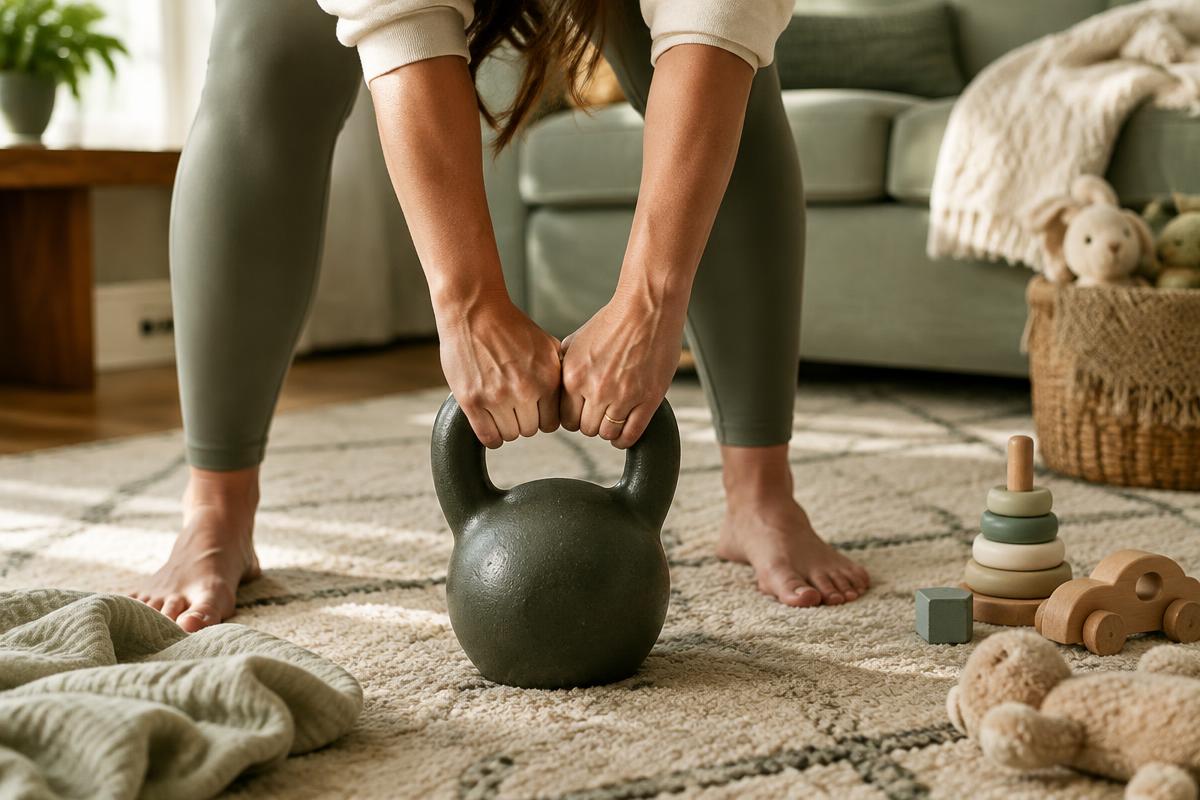 Health & FitnessStrong Mothers: Training for Real LifeGroceries are heavy. Life is awkward. A simple strength plan can help you practice for both—without turning every workout into a test.
 Health & FitnessThe Twenty-Minute Workout That Actually HappensYou have twenty minutes, including setup. Here’s a no-jumping routine that spends them moving instead of choosing a workout.
 Sleep & EnergySleep Is Not a Reward for Finishing EverythingThe dishwasher is humming. Your brain is still on duty. Here’s how to stop making sleep wait until the house is finished.
Get the weekly digest
One email a week. Unsubscribe anytime. Privacy Policy
More in Health & Fitness
The CagriSema Headline Said 25%. Here’s the Part Women Should Read Twice.
A 25% weight-loss headline sounds straightforward. Who was counted, what the researchers assumed and what they didn’t test make it a much more useful story.

The HRT and GLP-1 Finding Worth a Closer Look
A larger study is putting menopause hormones into the GLP-1 conversation. The findings are worth understanding, especially the difference between a pattern and proof.
Semaglutide or Tirzepatide After 50? What the Studies Actually Tell Women
Tirzepatide produced greater average weight loss in a direct trial, but age, medical history, strength and the outcome being studied all matter. Here is how to read the comparison without mistaking averages for personal promises.
Discussion
Loading comments…