The Twenty-Minute Workout That Actually Happens
You have twenty minutes, including setup. Here’s a no-jumping routine that spends them moving instead of choosing a workout.
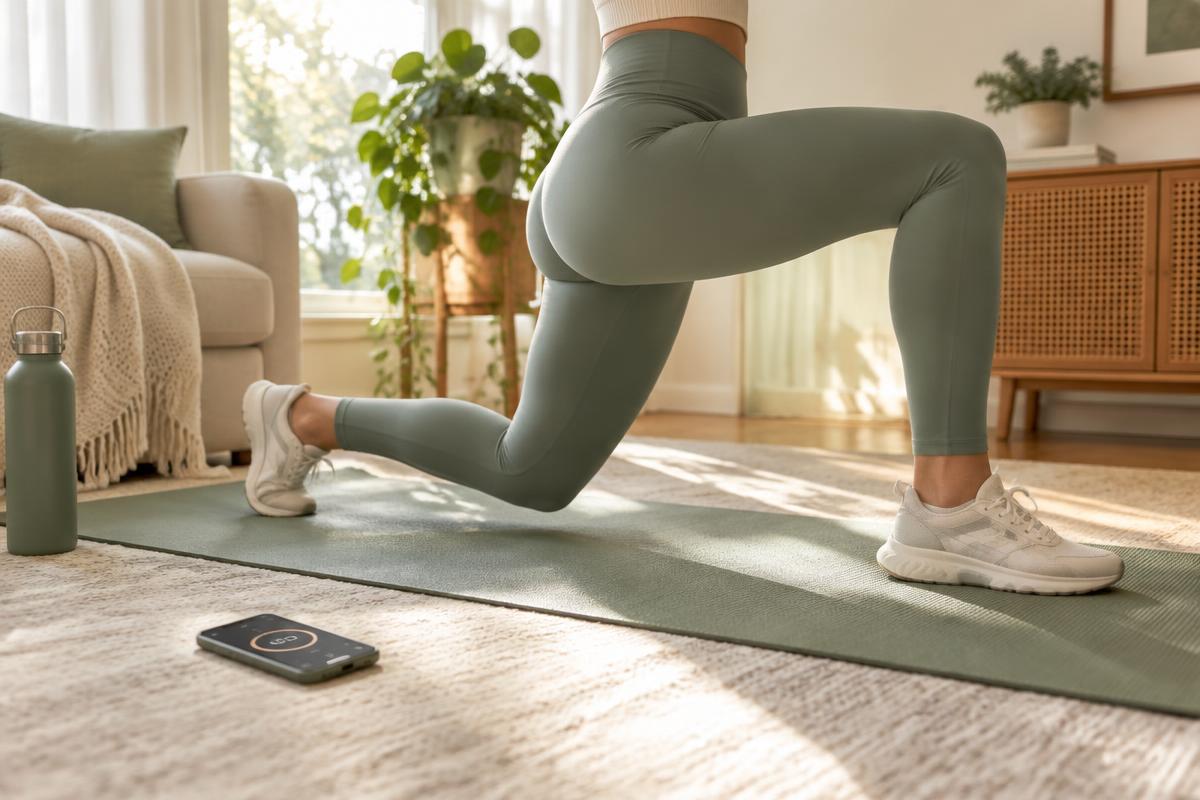
The microwave clock says 12:18. Your next call starts at 12:40, there is a cereal crumb stuck to your sock, and the workout video is still advertising somebody’s leggings. You have twenty minutes, not twenty minutes plus a production meeting.
You need a chair, a wall, and a clear patch of floor. No jumping, no floor transitions, no search for the resistance band that appears to have moved out with the missing puzzle pieces.
The quick read:
- Five minutes to warm up, twelve to move, three to finish.
- Short activity counts, but one session is not a whole weekly program.
- Easier versions and extra rest are part of the plan.
Can twenty minutes actually count?
Yes—with a little precision about what “count” means. The CDC says activity can be broken into smaller chunks and that some activity is better than none. A short window is not automatically too small to use.
The broader recommendation is at least 150 minutes of moderate aerobic activity each week, plus muscle-strengthening activity on two days. This mixed session offers movement practice and some strengthening. Its warm-up, rests, and easy intervals do not automatically equal twenty minutes of moderate aerobic exercise.
That distinction is useful, not deflating. You are building a repeatable piece of an active week, not trying to smuggle an entire program into a lunch break. Walking and appropriately challenging strength work can fill out the bigger picture over time.
Before starting, move toys and pets out of the way. Put a firm chair against a wall on a nonslip surface, and wear something that gives your feet reliable traction. Use a stable support if you need one. The goal is movement, not a surprise balance assessment.
Minutes zero to five: nobody needs a heroic entrance
Spend two minutes walking gently around the room or marching in place. Keep steps comfortable. Seated marching with easy arm movement is an option if standing is difficult.
For the third minute, add relaxed arm swings or shoulder rolls. Spend the fourth taking small side steps, staying near support if helpful. Return to comfortable marching for the fifth, gradually increasing your pace only if it feels good.
You should not need to catch up with an instructor. The warm-up is time to notice how you feel today, which may differ from yesterday. Poor sleep, stiffness, and a hectic morning are information, not a command to push harder.
For moderate aerobic effort, the CDC’s talk test is being able to talk but not sing. Staying below that while getting started is fine. This routine does not require you to hit a particular intensity during every station, especially strength practice.
Minutes five to seventeen: six stations, twice
Set a repeating timer for forty seconds of movement and twenty seconds of rest. Six one-minute stations, repeated twice, take twelve minutes. Forty seconds is a maximum working window, not an order to keep going after your movement gets shaky. Twenty seconds moving and forty resting is another option.
Station one: march or walk. Use the room or stay in place. Let your arms swing naturally. Seated marching works as an alternative. Choose an effort you can sustain without straining.
Station two: sit to stand. With feet planted, rise from the secured chair and lower yourself slowly. Use your hands for support as needed. Do a comfortable number of controlled repetitions, then rest rather than race the clock.
Station three: side steps. Step right, bring the other foot toward it, then travel left. Keep the distance small and stay near stable support if helpful. Seated sideways foot taps are another movement option.
Readers are also sharing: Where Do People Get Peptides? One Question Changes the Whole Search
Related: MOTS-c, the “Exercise Peptide”: She Had Plans for Saturday. Her Energy Did Not: the surprising research on the "exercise peptide" scientists have linked to energy and metabolism.
Station four: wall push-ups. Place your hands around chest height on the wall. Bend your elbows to bring your body toward it, then press away with control. Stand closer for an easier version. The NHS illustrated strength exercises guide can help you explore visual exercise guidance beyond this routine.
Station five: heel raises. Holding a stable support, slowly lift your heels and lower them. Keep the range comfortable. You can also lift and lower your heels while seated with your feet on the floor.
Station six: forward heel taps. Place one heel a short distance in front, bring it back, and change feet. Add relaxed arm swings if comfortable. Try it seated if that suits you better.
Take the rest after station six, too, then repeat the sequence once. If chair rises are unsuitable, seated knee straightening offers a gentler movement break. If pushing hurts, skip it. These alternatives keep you moving but are not equivalent strength exercises.
Minutes seventeen to twenty: leave something in the tank
Walk or march slowly for two minutes, gradually reducing your pace. Spend the last minute standing comfortably or sitting with feet supported, letting your breathing settle. There is no bonus challenge hiding at the end.
Keep breathing throughout the session. Stop for pain, dizziness, or unusual breathlessness; chest pain, fainting, or severe breathing difficulty need urgent help. For recent childbirth, surgery, injury, or a condition affecting exercise, ask a clinician about suitable modifications.
Finishing should include putting the space back safely, especially in a house with children. Weights are not required here, and a chair should not become a climbing invitation beside an unattended timer.
If the session feels too easy after several repeats, change one thing at a time: a slightly more purposeful walk, a few more controlled chair rises, or a more challenging push-up position. Do not simultaneously remove rest and speed everything up. More hurried is not the same as more useful.
Make the next twenty minutes easier to find
- Save the six-station sequence. Keep it somewhere you can reach without scrolling through recommendations. A scrap of paper works beautifully and never asks you to subscribe.
- Choose one likely window and one backup. A lunch break and a weekend morning might be possibilities, not promises. An interrupted day does not create an exercise debt.
- Prepare the space first. Move the chair and clear hazards before starting the timer. If twenty minutes includes setup, shorten the movement section rather than rush it.
- Record the fact, not a verdict. Note that you moved and how it felt. If a child interrupts after the first round, that activity still happened; resume later if practical, or stop there.
At 12:38, the leggings advertisement is long forgotten. Your chair is back at the table, your breathing is settling, and the call is about to begin. Nothing spectacular has happened. You have simply used a real window in a real day—and that is a sturdier beginning than waiting for the perfect one.
Read next
 Health & FitnessThat $140 Peptide Vial Has Some Explaining to DoAn expensive label can feel reassuring, and a bargain can feel risky. Neither feeling establishes what is in a product or whether it belongs in your care.
 Health & FitnessStrong Mothers: Training for Real LifeGroceries are heavy. Life is awkward. A simple strength plan can help you practice for both—without turning every workout into a test.
 Health & FitnessRecovery Is Not a Luxury for Busy WomenYour workout ends, but your workload doesn’t. Build recovery around real life—not an imaginary afternoon when nobody needs you.
 MotherhoodFamily Minimums for a Week That Falls ApartWhen the usual plan stops fitting, choose a smaller one. A practical way to protect essentials, pause optional work, and restart without creating a catch-up mountain.
Further research
Peptide research
Around the web
- Peptides: Types, Health Benefits, and Uses — WebMD
- Trends in peptide drug discovery — Nature Reviews Drug Discovery
- Therapeutic peptides: historical perspectives, current development trends, and future directions — Bioorganic & Medicinal Chemistry
Get the weekly digest
One email a week. Unsubscribe anytime. Privacy Policy
More in Health & Fitness
The CagriSema Headline Said 25%. Here’s the Part Women Should Read Twice.
A 25% weight-loss headline sounds straightforward. Who was counted, what the researchers assumed and what they didn’t test make it a much more useful story.

The HRT and GLP-1 Finding Worth a Closer Look
A larger study is putting menopause hormones into the GLP-1 conversation. The findings are worth understanding, especially the difference between a pattern and proof.
Semaglutide or Tirzepatide After 50? What the Studies Actually Tell Women
Tirzepatide produced greater average weight loss in a direct trial, but age, medical history, strength and the outcome being studied all matter. Here is how to read the comparison without mistaking averages for personal promises.
Discussion
Loading comments…