Strong Mothers: Training for Real Life
Groceries are heavy. Life is awkward. A simple strength plan can help you practice for both—without turning every workout into a test.
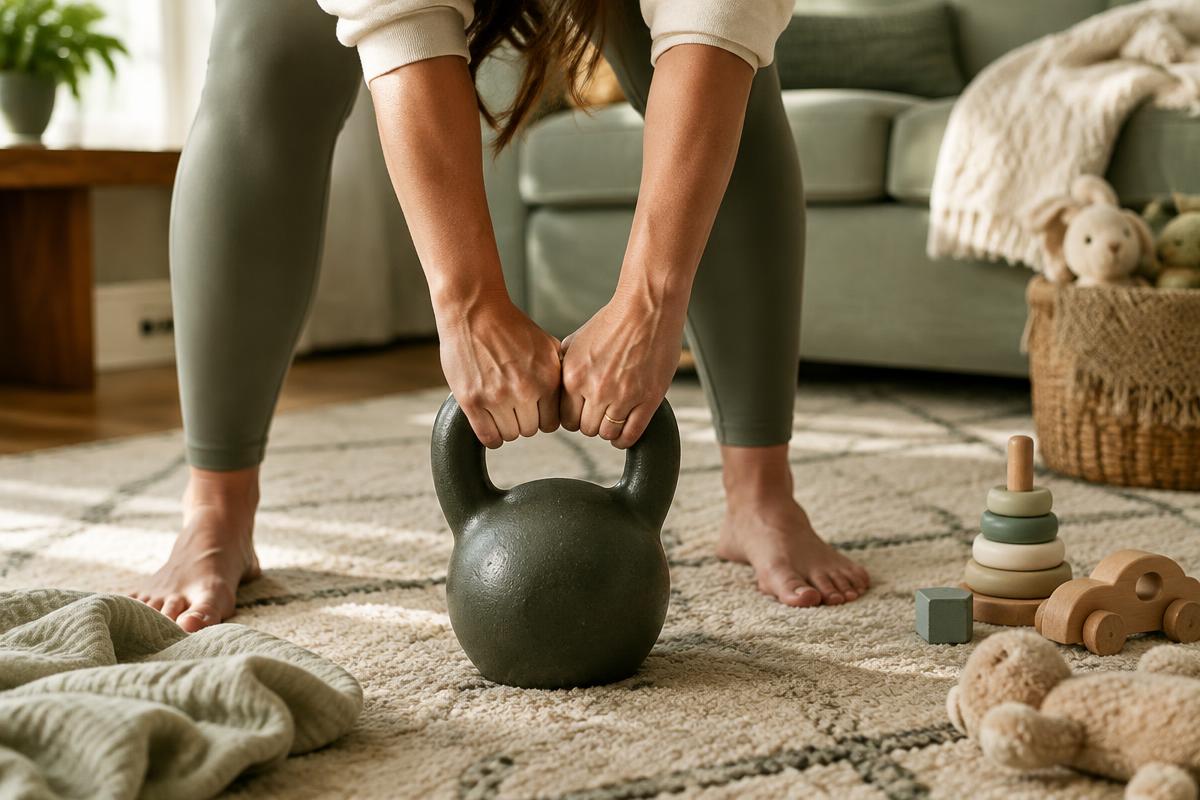
The grocery bag handles bite into your fingers. You hook the front door open with one foot while a child behind you drags a backpack through a puddle. Somewhere inside the bags, a jar knocks against another jar. You hope neither is the expensive one.
This is a strength challenge, certainly. It is not much of a training plan. Real life supplies awkward loads on its own schedule; training gives you a chance to practice manageable movements before the doorway becomes an obstacle course.
The quick read:
- Everyday lifting and planned strength work are not interchangeable.
- A few repeatable movements beat a new routine every session.
- Progress can mean steadier movement, not just heavier weights.
Carrying everything is not the same as training
Household work can be physically demanding without offering a balanced or adjustable challenge. The toddler wants carrying on the same hip. The laundry basket has terrible handles. Nobody has designed the supermarket run around your recovery.
Strength work gives you more choice: a stable setup, a load you can control, time to rest, and the option to stop. You can practice using both sides instead of defaulting to whichever arm is not holding somebody’s snack.
The CDC recommends muscle-strengthening activity on at least two days each week, working all major muscle groups. That includes legs, hips, back, abdomen, chest, shoulders, and arms. A few biceps curls are not the entire assignment, although they can be part of it.
You do not have to earn this time by becoming a more efficient carrier of family belongings. Wanting to feel capable, enjoy a sport, or learn a skill is enough. Your body gets to be something other than the household’s delivery vehicle.
Your first program can be pleasantly boring
Choose two realistic sessions with recovery time between them. Keep the movements familiar for several weeks. Repetition lets you notice whether a chair rise is smoother or a weight easier to control; constant novelty can hide those small changes.
The CDC describes eight to twelve repetitions as one set and recommends at least one set for each strengthening activity. That is general guidance, not a compulsory starting score. A beginner may need fewer easy practice repetitions while learning. Technique matters more than reaching a number with a grimace.
Start with a stable chair for sit-to-stands, a wall for push-ups, and a clear floor. Later, bands or weights can expand the options. Check equipment instructions, and get a qualified trainer’s help with unfamiliar setups rather than improvising a precarious anchor point.
Let the first sessions feel almost underwhelming. You are learning how to arrive, move, rest, and put things away safely. Those are useful skills in a house where a missing shoe can derail an entire morning.
Five movements, plenty of real-life relevance
A sit-to-stand practices rising and lowering under control. Put a firm chair against a wall on a nonslip surface. Plant your feet, stand, and sit slowly. Use your hands for support when needed; choosing support is not cheating.
A hip hinge starts with soft knees and hips moving backward, rather than a hurried fold through your back. Practice without a load first. A qualified coach can help if the motion feels confusing or you plan to add weight.
Related: CJC-1295 and Strength After Kids: What Moms Should Know: the research on the peptide strength-training moms keep asking about, and what it means for building muscle after kids.
Readers are also sharing: Your Gym Friend Looks Stronger. Let’s Talk About Your Comeback
A wall push-up gives you a controllable pushing movement. Place hands around chest height and bring your body toward the wall, then press away. Stand closer to make it easier. The NHS exercise library offers strength and resistance videos for visual guidance.
A row practices pulling, using an appropriate band or weight and a secure setup. A carry practices walking with a manageable load held predictably at your sides. Keep the route short and clear; put the load down before your grip or posture gives up.
These are options, not a requirement to do all five on day one. Children should stay clear of weights and equipment. A baby is not a substitute dumbbell, however convenient that might look in a video.
The part nobody photographs: the rest
Rest between efforts is part of the session. It lets you return with control rather than turn every exercise into a breathless race. Keep breathing through movements; do not chase a repetition that makes you strain or lose your setup.
Aerobic activity belongs alongside strength work, not in competition with it. The CDC’s weekly aerobic target is at least 150 minutes of moderate-intensity activity, or 75 minutes of vigorous activity, or an equivalent mix. You can build toward that gradually. Your strength session does not have to impersonate a sprint workout to be worthwhile.
A rough night, illness, or unusually demanding week may call for a lighter session or rest. Do not punish missed training by doubling everything next time. Returning to a familiar, comfortable version is a plan, not a confession.
Stop an exercise that causes pain. For recent childbirth, pregnancy, surgery, or symptoms such as pelvic heaviness or leakage, ask an appropriate clinician about modifications. A general article cannot know your recovery history.
A four-step plan for the next two sessions
- Reserve a small, honest window. Include setup, a gentle walking warm-up, practice, rest, and cleanup. Twenty minutes you actually have is better than an imaginary uninterrupted hour.
- Choose three familiar movements. For example, try chair rises, wall push-ups, and a safely taught pulling movement. Start with a few controlled practice repetitions and stop before technique deteriorates.
- Record only what helps. Note the movement, resistance or variation, and how it felt. “Same chair, less hand support” may tell you more than a wearable’s calorie estimate.
- Change one thing when ready. Once the current version feels comfortably manageable, consider a little more resistance or another controlled repetition. Keep the rest stable so you can judge the change.
After those two sessions, ask a better question than whether you look different: Can you repeat this without borrowing time from sleep or leaving yourself wiped out? A plan that fits your life has a chance to become familiar enough to grow.
Back at the front door, the groceries are still awkward and the backpack is still wet. Training cannot make family life stop handing you things. It can give you a place to practice carrying a chosen load—and, just as importantly, deciding when to put it down.
Read next
 Health & FitnessYour Gym Friend Looks Stronger. Let’s Talk About Your ComebackPeptide talk can turn an ordinary workout into a comparison exercise. Here is how to bring the focus back to your own strength and recovery.
 Health & FitnessThe Twenty-Minute Workout That Actually HappensYou have twenty minutes, including setup. Here’s a no-jumping routine that spends them moving instead of choosing a workout.
 Health & FitnessRecovery Is Not a Luxury for Busy WomenYour workout ends, but your workload doesn’t. Build recovery around real life—not an imaginary afternoon when nobody needs you.
 Health & FitnessHealth Metrics Without Another ObsessionYour watch has plenty of numbers. Which ones actually help? A smaller dashboard can make room for better questions—and less checking.
Further research
Peptide research
Around the web
- Peptides: Types, Health Benefits, and Uses — WebMD
- Trends in peptide drug discovery — Nature Reviews Drug Discovery
- Therapeutic peptides: historical perspectives, current development trends, and future directions — Bioorganic & Medicinal Chemistry
Get the weekly digest
One email a week. Unsubscribe anytime. Privacy Policy
More in Health & Fitness
The CagriSema Headline Said 25%. Here’s the Part Women Should Read Twice.
A 25% weight-loss headline sounds straightforward. Who was counted, what the researchers assumed and what they didn’t test make it a much more useful story.

The HRT and GLP-1 Finding Worth a Closer Look
A larger study is putting menopause hormones into the GLP-1 conversation. The findings are worth understanding, especially the difference between a pattern and proof.
Semaglutide or Tirzepatide After 50? What the Studies Actually Tell Women
Tirzepatide produced greater average weight loss in a direct trial, but age, medical history, strength and the outcome being studied all matter. Here is how to read the comparison without mistaking averages for personal promises.
Discussion
Loading comments…