If Not Now, When? Your Real-Life Reset
A reset should make ordinary life lighter, not give you a second job. Try one two-week experiment with room for interruptions.

You are standing at the kitchen counter at 9:43 p.m., scrolling past a morning routine that starts before sunrise. Beside your elbow sits a school form with a sticky patch of jam. The dishwasher hums, and upstairs someone calls for another drink.
You save the routine anyway. Perhaps next Monday you will become the woman who exercises, journals, and eats breakfast before anyone needs her. Tonight, finding the pen would count as momentum.
A reset can offer hope. It can also become a cleverly disguised second job. Instead of rebuilding your whole life, try changing one part of an ordinary day—and finding out whether the change actually helps.
The quick read:
- Choose one recurring friction point, not a new personality.
- Count the time and energy a plan really costs.
- Test one change for two weeks, with permission to adjust or stop.
What is the moment you keep dreading?
For the next few days, notice when you think that something cannot continue like this. Skip the complete life audit. You are looking for a repeated scene: lunch eaten standing up, work messages answered in bed, or the friendship that survives entirely through apologies for not calling.
Name the problem before choosing the solution. A need for companionship probably will not be met by a solitary workout. A need for sleep is unlikely to benefit from a more ambitious alarm. Beautiful routines can be spectacularly wrong for the problem at hand.
The NHS's five steps to mental wellbeing include connection, activity, learning, giving, and attention to the present. Treat them as options, not a five-part homework assignment. If your day already revolves around giving, another act of service may not be the missing ingredient.
The same guidance explains that learning can improve confidence and provide a sense of purpose. That leaves room for a reset that is not about fitness, food, or getting more done. You might need to feel interested again, not become more efficient.
A smaller plan can be more honest
Choose an outcome you can recognize. Feeling like a new woman is difficult to assess. Eating a seated lunch twice this week or having one unrushed conversation gives you something real to test.
Write four things on a scrap of paper: what you will try, when, what will make room for it, and when you will review it. For example, you might plan a short Tuesday call during a walk and move the grocery order to another time. Check that the friend is available before declaring the experiment ready.
Two weeks is a convenient review window, not a claim about how long habit formation takes. You are gathering information about fit. A missed day is information too: perhaps that time was never available, or the setup needed more support than expected.
If movement is your chosen change, the CDC recommends at least 150 minutes of moderate-intensity activity weekly and strengthening on two days. It also says activity can be divided into smaller chunks. You do not have to begin at the full recommendation for a short walk to count.
Choose something appropriate to your current health and capacity. A starter experiment is an opening, not a promise that one small action will solve everything. Its job is to be useful enough that you might choose it again.
Who pays for the supposedly free hour?
The class lasts an hour, but travel adds forty minutes. The relaxing bath requires cleaning the tub. The early walk quietly takes its payment out of sleep. Count preparation, transportation, cleanup, and recovery before deciding a plan is small.
Also ask who handles the work you would otherwise be doing. If another adult takes over bedtime but leaves every decision and missing pajama with you, the handoff needs clarifying. If your break means twice the chores afterward, the cost has not disappeared.
Readers are also sharing: When the Group Chat Recommends BPC-157: What the Evidence Actually Says
Related: Your Gym Friend Looks Stronger. Let’s Talk About Your Comeback: what's really behind the comeback everyone at the gym seems to be having, and how to start your own.
For a solo parent or someone working shifts, the opening may be narrower and less predictable. That does not mean you need more discipline. It means the experiment has to fit the support actually available, perhaps through a shorter activity, an existing transition, or a specific favor from someone trusted.
Remove something optional before adding something new. Simplify a dinner, postpone an errand, or decline a commitment that does not need to be yours. Keep essential care in place. The point is a genuine opening, not hiding an extra task under the label of self-care.
What happens when Tuesday falls apart?
Plan the awkward-day version in advance. If a call becomes impossible, a brief voice message might preserve connection. If a child is ill, you may simply skip the experiment. You do not owe Wednesday twice as much effort.
The smaller version should still answer the original need. Five minutes stretching may suit a wish to move. Five minutes folding laundry alone probably will not meet a wish for friendship, even if nobody interrupts. Smaller is helpful when it remains relevant.
The NIMH notes that small amounts of exercise add up, and that self-care can involve small daily acts. Its guidance also includes setting priorities and deciding what can wait. A useful reset may therefore involve less activity on your calendar, not more.
Notice when a fallback starts feeling like punishment. You are not required to perform a tiny symbolic version of a plan every day to prove you meant it. Sometimes rest or abandoning an unsuitable idea is the most accurate response to the evidence.
Try this tonight: write the whole experiment
- Pick one repeated snag. Use a specific scene from your week rather than a broad verdict about being disorganized or unfit.
- Choose one test. Plan a seated lunch, a short walk, a creative break, or a call. Say when it could happen and keep the first version modest.
- Make room on purpose. Identify what will wait and who, if anyone, will take over a responsibility. Include preparation and cleanup in the estimate.
- Set a review date and fallback. In two weeks, ask whether it helped, what blocked it, and whether you want to continue. Decide now that a missed opportunity creates no debt.
At the review, separate liking the activity from finding time for it. One enjoyable lunch walk might suggest protecting a break, not demanding a stronger commitment. If the plan consistently drains you, stop or redesign it without staging a trial of your character.
If ongoing exhaustion, low mood, or anxiety is making daily life difficult, check in with a clinician. A routine change can support you, but it should not become a reason to postpone getting help.
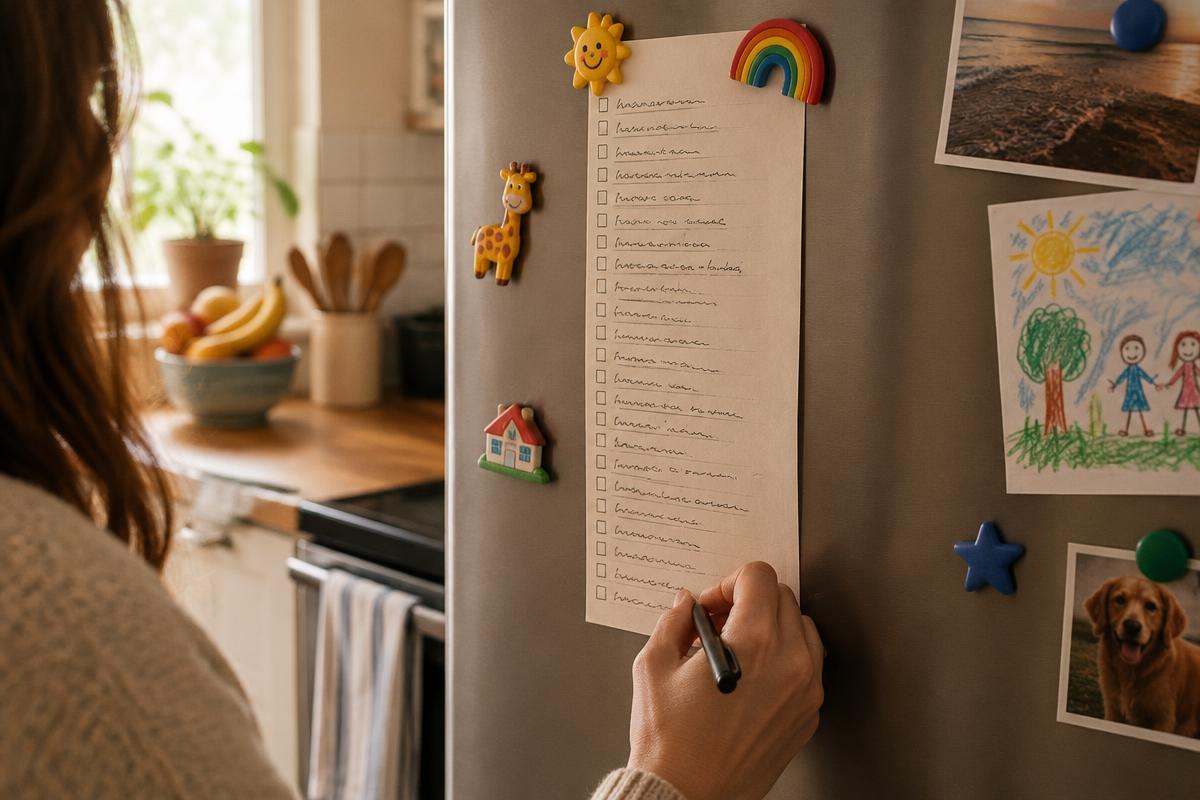
The counter is still sticky, and the form still needs signing. Put the pen beside it. Then write one small experiment on the back of a scrap of paper. You do not need a different life before you begin; you need a change kind enough to belong in this one.
Read next
 Real Stories & CommunityWhen the Group Chat Recommends BPC-157: What the Evidence Actually SaysA parent asks the chat for a physiotherapist and gets a BPC-157 tip instead. Before a recommendation becomes evidence, ask whether the research studied the same problem in people.
 MotherhoodFamily Minimums for a Week That Falls ApartWhen the usual plan stops fitting, choose a smaller one. A practical way to protect essentials, pause optional work, and restart without creating a catch-up mountain.
 Beauty & Self CareMake Room for Downtime by Deciding What Can WaitA practical way to protect a little personal time by changing the workload around it, rather than adding another task to the list.
 MotherhoodMake Room for an Identity Beyond MotherhoodYou do not need a reinvention plan to stay connected to yourself. Start with an interest, a preference, or a conversation that belongs to you.
Get the weekly digest
One email a week. Unsubscribe anytime. Privacy Policy
More in Real Stories & Community
When Did I Become Last on My Own List?
Your appointment keeps moving; everyone else’s stays put. Here’s how to turn one postponed need into a plan that actually has room for you.
Discussion
Loading comments…