When Did Getting Dressed Stop Feeling Fun?
The jeans pinch, the clock is ticking, and nothing feels like you. A small wardrobe reset can make getting dressed feel personal again.
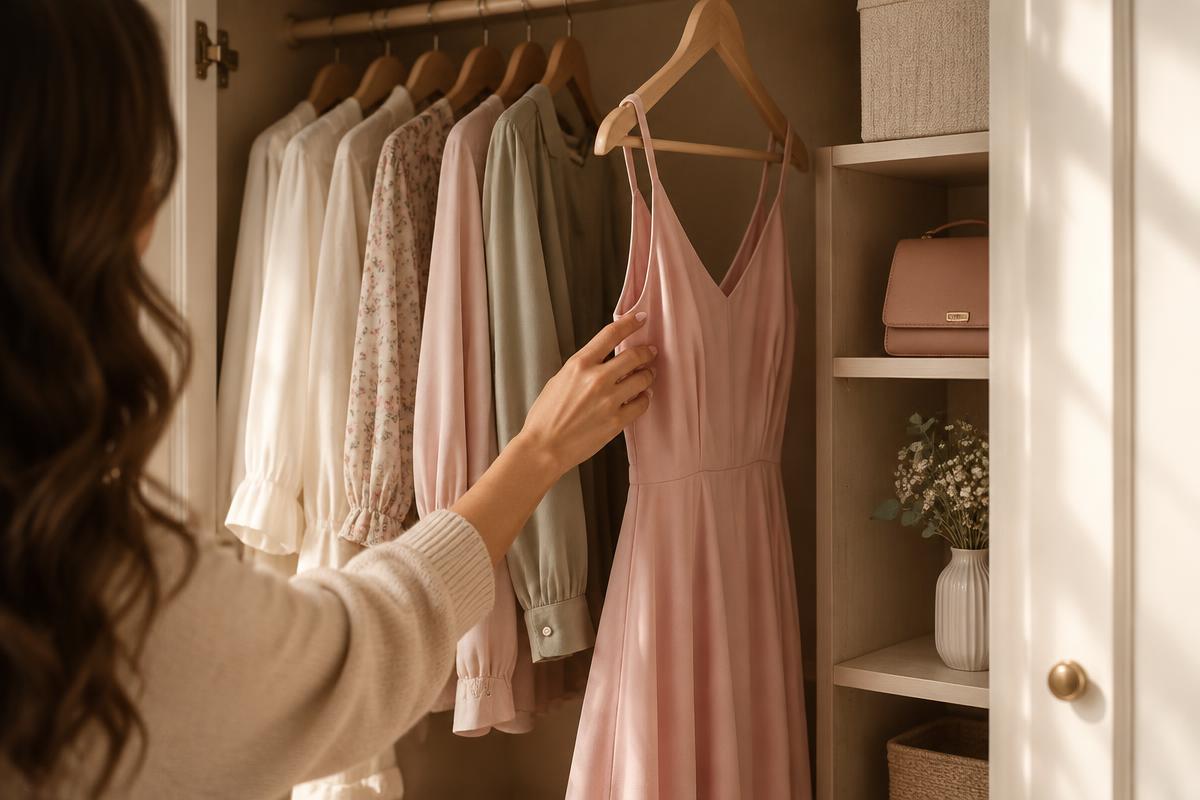
You have eleven minutes before the school run, and the bedroom floor is already wearing three outfits. The jeans dig in when you crouch to retrieve a sock. A sweater crackles with static. From the hallway comes the urgent news that the water bottle smells weird.
You pull on yesterday's reliable combination. It is fine. You just miss the part where getting dressed felt like choosing something, rather than surviving a small textile emergency.
That pleasure is worth recovering. Not with a wholesale makeover, and not after your body earns permission to enjoy clothes. Start with the morning you actually have.
The quick read:
- Fit problems are clothing problems, not character evidence.
- A useful wardrobe needs to work while you sit, reach, and move.
- Small experiments can reconnect comfort with your own taste.
Is your wardrobe dressed for somebody else's life?
A full closet can contain surprisingly few outfits for your actual Tuesday. There are shoes for dinners you rarely attend, a blouse that needs ironing, and trousers that work beautifully provided you never sit down. Meanwhile, your day involves a desk, wet playground benches, and kneeling beside the bathtub.
This is a mismatch, not a failure of imagination. Before buying anything, choose one situation that repeatedly defeats you. Perhaps it is going straight from school drop-off to a video meeting. Perhaps everything comfortable feels too warm by lunchtime.
Finish one sentence: getting dressed would be easier if I had clothes that could do what? Stay comfortable while seated? Layer easily? Work with shoes I can walk in? The more ordinary the answer, the more useful it becomes.
Leave the grand style identity for later. Solving “two tops that work with these trousers” is a perfectly respectable fashion ambition. It may also return more pleasure than a dramatic piece that demands its own bra, weather forecast, and supporting cast.
Why can one size label ruin a morning?
Because trying on clothes is rarely just a technical exercise. In a qualitative study of 20 women ages 18–45, researchers recorded women's spontaneous reactions while trying dresses, then explored their experiences in interviews. Fit, body confidence, size coding, and an idealized hourglass shape all emerged as themes.
It was a small study, not a national verdict on women's closets. But its design captured something recognizable: the conversation with yourself begins while the zipper is still moving. A garment can feel like a judgment before you have asked whether it was cut for your proportions.
Try reversing the inspection. Does the shoulder seam sit comfortably? Can you breathe and reach? Is the fabric doing something you dislike? Those questions evaluate the object you might wear, rather than the person wearing it.
A size label is useful for locating another garment to try. It cannot summarize your health, your attractiveness, or how well you are managing life. Keep the clothes that fit today in the easiest place to reach. Meaningful older pieces can stay, but they need not conduct morning performance reviews.
Related: GHK-Cu, the Copper Peptide: When Did I Start Hiding From Family Photos?, it follows the skin-confidence questions that can make being in the family picture feel more inviting.
Your feed might be in the fitting room too
Even when you dress alone, there can be a crowd in the mirror: polished outfits, carefully selected bodies, and the woman online who apparently owns a white sofa and never spills coffee. It is worth noticing which images leave you curious and which leave you diminished.
Readers are also sharing: One Word, Four Very Different Products: The Peptide Mix-Up
In a randomized study of 66 female undergraduates, participants assigned a one-week social-media break reported better body satisfaction and self-esteem than those continuing usual use, after accounting for baseline scores. These were young women, not a study specifically of midlife mothers, and the experiment was short.
Still, it offers a practical idea to test, not a new rule to obey. For a week, stop checking appearance-focused feeds before getting dressed. Notice whether the internal commentary changes. You can keep inspiration that helps you use your clothes and mute accounts that make every outfit feel inadequate.
Inspiration should generate possibilities: that color looks good with navy; those shoes might work with my dress. If it mostly generates shopping lists and self-criticism, it is not doing the job you hired it for.
What if the problem is heat, not style?
Sometimes a formerly easy outfit becomes annoying because your physical experience has changed. A collar feels restrictive, a waistband bothers you, or you need a layer you can remove quickly. Those are useful clues about comfort, not evidence that you have become difficult.
The NHS explains that menopause and perimenopause symptoms can affect physical and mental health, and that menopause usually occurs between ages 45 and 55. Symptoms can start before periods stop. None of that means every sweaty commute or clothing frustration is hormonal.
If new symptoms are troubling you, a brief check-in with a clinician is worthwhile. Meanwhile, dress for what is happening today: breathable layers if you prefer them, a softer waistband, a bra that feels comfortable, or an alternative fabric. You do not have to identify a medical explanation before removing an itchy label.
Try clothes while doing real things. Sit for a minute. Reach for an imaginary high shelf. Bend to fasten a child's shoe. If you spend the whole test tugging, the garment has supplied valuable feedback. It may need an alteration, another size, or retirement from everyday duty.
Try a fifteen-minute wardrobe truce
Do this with one small section, not the entire closet. You are aiming for a better morning, not a bedroom renovation.
- Choose three comfortable pieces. Pick items you could wear now, with your current underwear and shoes. Set repairs aside rather than counting them as ready.
- Build two complete combinations. Include the layer and footwear. Sit and move in both before declaring them successful.
- Add one thing you genuinely like. A green scarf, an interesting earring, bright socks, a familiar jacket: pleasure can be small and specific.
- Make tomorrow visible. Hang one combination together and note one genuine gap. Wait before shopping; a missing basic is different from a mood.
Repeat an outfit if you love it. Repetition can be evidence that you found something useful, not that imagination has left the building. If photographs help, save a private outfit reference. If they trigger more criticism, write down the combination instead.
Tomorrow, the water bottle may still need rescuing. There may still be eleven minutes and a sock under the bed. But your clothes can stop arguing with you before breakfast. A comfortable outfit with one detail you enjoy is a small way of saying: this morning belongs to you, too.
Read next
 Beauty & Self CareYour Copper-Peptide Serum Has a Science Story. Let’s Get Into ItGHK-Cu may sound like the next skincare essential. Before adding another bottle, separate the ingredient, the finished product and the evidence.
 Beauty & Self CareGetting Dressed for the Body and Day You HaveBuild a few comfortable outfit choices from what fits your actual life, without making confidence another standard to meet.
 Beauty & Self CareA Getting-Ready Routine with Fewer DecisionsKeep the parts of getting ready that you enjoy and give rushed mornings a simple version that needs no new purchases.
 MotherhoodI Love My Children. I Miss Myself. Both Can Be True.You can adore your family and ache for parts of your old life. Naming what you miss can reveal a surprisingly small place to begin.
Further research
Peptide research
Around the web
- Peptides: Types, Health Benefits, and Uses — WebMD
- Trends in peptide drug discovery — Nature Reviews Drug Discovery
- Therapeutic peptides: historical perspectives, current development trends, and future directions — Bioorganic & Medicinal Chemistry
Get the weekly digest
One email a week. Unsubscribe anytime. Privacy Policy
More in Beauty & Self Care
Peptides in Beauty and Wellness: Why Moms Are Paying Attention
From copper-peptide serums to major medical breakthroughs, explore the encouraging science behind a very small molecule with a big story.
GHK-Cu, the Copper Peptide: When Did I Start Hiding From Family Photos?
A familiar moment behind the camera opens a careful look at GHK-Cu, topical skincare research, and the limits of a compelling ingredient story.
Discussion
Loading comments…